
12 Signs Your Roof Needs Replacement (Not Just Repair)
Roofs rarely fail all at once — they advertise their age for seasons first. Here are the twelve signs that say “replace,” not “patch,” and how to read them honestly.
Quick Answer — The 12 Signs at a Glance
- Past its material’s service life · shingles curling or clawing · bald spots and granules filling the gutters.
- Moss or algae spreading ridge to eave · missing or cracked shingles on several planes.
- Daylight in the attic · chronic leaks in multiple areas · water stains on ceilings or walls.
- A sagging roof deck or ridge line · step flashing failing in several valleys · rising energy bills · neighbors replacing same-age roofs.
- Widespread wear, damage past 25–30% of a plane, or a roof near end-of-life tips the decision to replacement.
How Long Should Your Roof Last Before Replacement?
Every roof has a clock, and the material sets the pace: 3-tab shingles give 15 to 20 years, architectural shingles 20 to 30, standing-seam metal 40 to 70, and slate or tile 50 or more. Those ranges assume decent attic ventilation and a sane maintenance history. A roasting attic or chronically clogged gutters subtracts years from either end.
How Do You Find Your Roof’s Actual Age?
Start with the paperwork: permits, closing documents, or the invoice from the previous owner’s project. Look for spare shingle bundles in the garage — manufacturers print production dates on the wrappers. When records fail, a home inspector can age a roof within a few years from shingle condition, and that estimate is close enough for budgeting.
Age matters because it reframes every other symptom. A curling shingle at year 8 is a ventilation conversation; the same curling at year 24 is a replacement plan. The full dozen, with age established:
- Your roof is past its material’s expected service life
- Shingles curling or clawing across the roof
- Bald spots and granules filling the gutters
- Moss or algae spreading ridge to eave
- Missing or cracked shingles in several planes
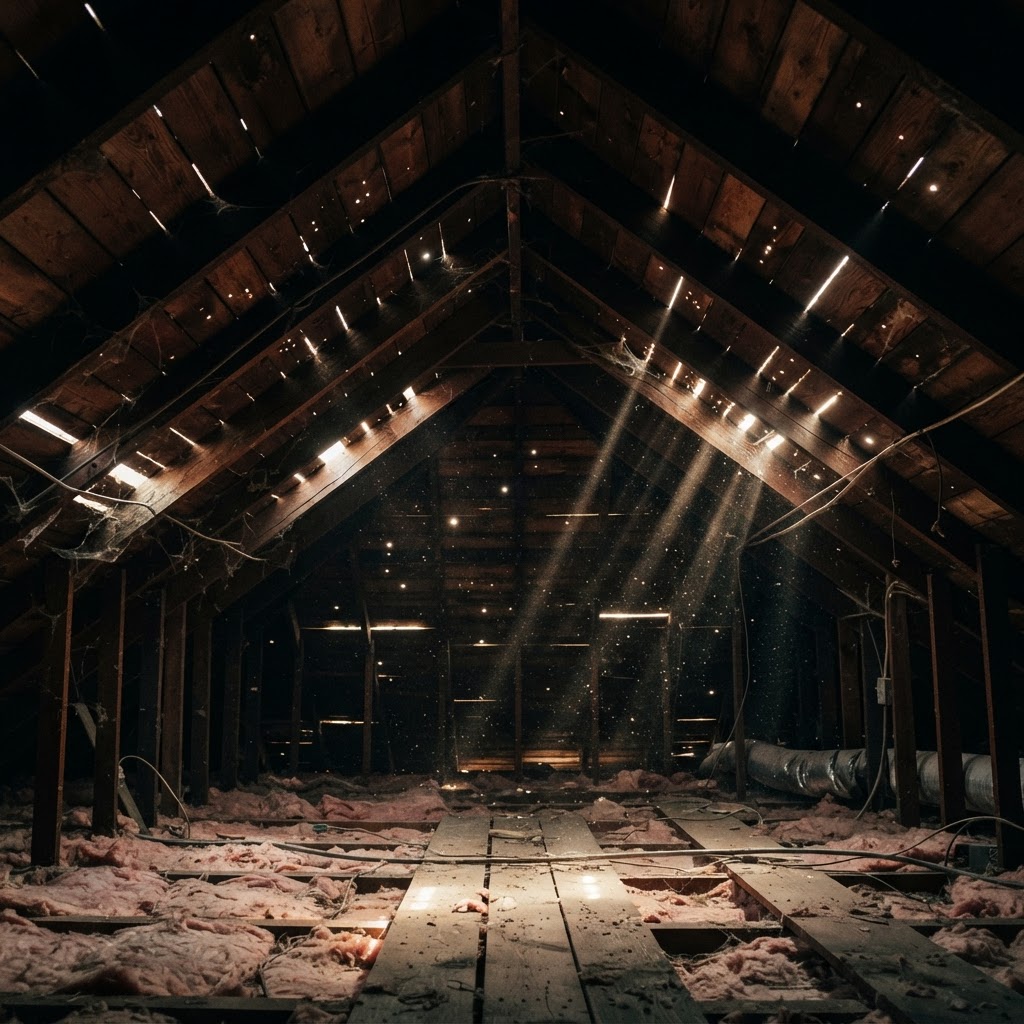
- Daylight visible in the attic
- Chronic leaks in multiple areas
- Water stains on ceilings or walls
- A sagging roof deck or ridge line
- Step flashing failing in several valleys
- Energy bills creeping up without a usage change
- Neighbors with same-age roofs are replacing
Which Outside Signs Mean Replacement, Not Repair?
Curling and clawing are the classic aging tell. Cupped edges, shingles lifting at corners, tabs curling back on themselves — heat and age have stiffened the mat past its elastic life. One curled shingle is a repair; a slope full of them is a roof that has lost its seal.
Granule loss tells the same story from the ground. Those gritty ceramic granules are the shingle’s sunscreen, and when they shed into the gutters by the handful, ultraviolet light starts eating the asphalt underneath. Bald spots on a roof past year 15 are a replacement pattern, not a patch.
Why Are My Gutters Filling With Shingle Granules?
Some granules in gutters are normal, especially in a roof’s first couple of years as loose coating settles. Steady accumulation at year 15 and beyond means the protective layer is leaving. Check gutter bottoms and downspout splash pads after big storms; if you are scooping granules like coarse sand every spring, the roof is shedding its armor.
Moss and algae close out the exterior list. Moss holds moisture against the shingle and lifts its edges; algae streaks are mostly cosmetic but mark a roof in its second decade. And when neighbors with same-age tract roofs start replacing, your builder-grade roof is statistically right behind them.
What Does Your Attic Tell You About the Roof?
The attic is the roof’s honest witness. Pinpoints of daylight through the boards, water staining on the sheathing around nails, or damp, matted insulation each mean water is getting past the covering. One stain under one penetration can be a flashing fix; staining spread across multiple roof planes is a roof in systemic failure.
Attic ventilation ties this to roof life. A poorly vented attic superheats in summer and traps moisture in winter, cooking shingles from below and feeding the melt-freeze cycle behind ice dams. Chronic leaks, rising bills, and frost on sheathing nails usually arrive together — and together they describe a roof-and-attic system ready for replacement.
How Does a Failing Roof Raise Your Energy Bills?
Moist insulation loses much of its R-value, and a superheated attic radiates into bedrooms long after sunset. The air conditioner runs longer, the furnace chases drafts, and the bill creeps up with no change in your habits. If usage has not changed but the bill has, the attic is a good place to look next.
Which Structural Signs Should Worry You Most?
A sagging ridge or wavy roof plane means the structure is moving: saturated decking, stressed rafters, or decades of moisture at the supports. Viewed from the street, a dip or belly along the ridge line is not cosmetic. This is the one sign where you schedule an inspection immediately rather than this season.
Step flashing — the metal pieces where the roof meets walls, chimneys, and valleys — fails differently. One bad section is a repair. The same leak reappearing at three valleys after three repairs means the system, not a piece, has aged out; chronic repairs at different spots are the quiet signature of a finished roof.
When Can Damage Still Be Repaired Instead?
Repairs shine when the problem is truly local: wind-torn tabs on one slope, a cracked boot around a vent pipe, flashing at a single chimney. The roof is young, the shingle style is still in production, and the deck underneath is dry. Done well, that repair buys years. Repair still makes sense when:
- The roof is well inside its expected service life for the material
- Damage is confined to one plane or one penetration
- The failure is flashing or a component, not the field of shingles
- Matching shingles are still manufactured and available
- Repairs have been occasional — not a season-long pattern
The industry rule of thumb: when damage runs past roughly 25 to 30 percent of a roof plane, or repair quotes stack toward a third of replacement cost, the economics flip. Layering new shingles over a failing field rarely works; the old roof telegraphs its problems through. At that point the honest answer is replacement.
I tell clients to price the decision, not the shingle. Once repair quotes start stacking toward a third of replacement, the roof has voted.
— Sam Construction Group USA, Fairfax roofing & restoration team
What Do Repairs Cost Compared With Replacement?
A single flashing repair might run $300 to $600, and a section rebuild can reach $1,000 to $3,000 depending on materials and access. Against an $11,000 to $17,000 architectural replacement in Northern Virginia, one repair is noise — five repairs is a down payment on the wrong project. Remodeling Magazine’s Cost vs. Value Report still finds roughly 60 percent of replacement cost returned at resale; a repair returns almost none.
Insurance adds its own nudge. Many carriers now settle older roofs at actual cash value, subtracting depreciation, and some restrict or surcharge roofs past a certain age. Replacing on your calendar almost always prices better than replacing on the insurer’s.
Age is the one symptom homeowners can’t see from the driveway, and it’s the one that reframes everything else. A 26-year-old roof with one leak rarely deserves a fourth patch.
— Lead Estimator, Sam Construction Group USA
What Does Waiting Really Cost?
Water does not wait politely. A stained ceiling becomes a soaked cavity, wet insulation collapses, and mold can begin growing on consistently damp building materials within 24 to 48 hours, according to EPA guidance. Emergency tarping, interior repairs, and off-schedule work reliably cost more than the planned version of the same project. An unplanned replacement also happens at the worst time — mid-storm-season, with the best crews booked out and tarps in short supply.
There is also the quiet cost of a roof you cannot stop thinking about. Every hard rain becomes an attic flashlight tour; every storm forecast becomes a calculation. Replacement buys that attention back, along with a new workmanship warranty and a roof engineered for the next three decades — not the last one.
Here is the triage view — what each common symptom usually means:
| Symptom | Likely Severity | Typical Recommendation |
|---|---|---|
| One curled or missing shingle near an eave | Low | Repair the shingle and inspect that slope |
| Granules filling the gutters on a 15+ year roof | Moderate to high | Plan replacement within a season or two |
| Single leak at one flashing point | Low to moderate | Repair the flashing and monitor |
| Leaks in two or more roof planes | High | Replace |
| Daylight through the attic sheathing | High | Replace |
| Sagging ridge or roof deck | Severe | Immediate inspection, then replacement |
Roof Replacement Signs — Frequently Asked Questions
Can I replace only part of my roof?
Technically yes, and occasionally it is right — when damage is truly confined to one plane and the rest of the roof is young. But new shingles rarely blend with weathered ones, and splitting the job means paying for setup twice. Once wear is widespread, most contractors recommend full replacement.
Is it OK to put new shingles over old ones?
Most manufacturers don’t allow it for enhanced warranties, and code limits asphalt roofs to two layers at most. A layover hides deck problems and adds weight the structure was never checked for. Tear-off costs more now and prevents the worst surprises later.
Will homeowners insurance pay for an old roof?
Carriers cover sudden perils like hail and wind, but many now settle older roofs at actual cash value, subtracting depreciation. Age-related wear is never a covered event. Read your roof-coverage schedule before storm season, not after a claim.
How long does a full roof replacement take?
Most Northern Virginia homes are stripped and re-shingled in one to three working days, weather permitting. Complex roofs with multiple planes or heavy materials take longer. The schedule matters less than dry weather and a final walkthrough inspection.
What time of year is best to replace a roof?
Late spring through early fall offers the most reliable weather, and quality crews install year-round in our climate. A failing roof shouldn’t wait for a perfect month — damage doesn’t pause while you schedule. Good contractors protect the home in any season.
Ready to Replace With Confidence?
We’ll inspect, photograph what we find, and give you a written recommendation — repair or replace — with no pressure either way. If the roof has years left, we’ll tell you.
☎ (571) 373-6388This article is general information for Northern Virginia property owners and is not a quote or a statement of any specific product’s terms. Costs, lifespans, and savings vary by home, climate, and product line — always confirm specifications for your own project. Free inspections: (571) 373-6388.