
Flat & Low-Slope Roof Repair for Northern Virginia Homes: Porches, Additions & Dormers
Many Northern Virginia homes have flat or low-slope roof sections — over porches, additions, dormers, and garages — that need different materials and expertise than steep shingle roofs. These areas are prone to ponding water and leaks.
Quick Answer: The 90-Second Summary
- Many NoVA homes have low-slope sections over porches, additions, dormers, and garages.
- Standard shingles are not designed for low-slope roofs — they need specialized materials.
- Ponding water is the biggest problem on flat and low-slope roofs.
- Transitions and flashing where these sections meet the main roof are common leak points.
- For residential low-slope roof repair, call Sam Construction Group USA: (571) 294-4977.
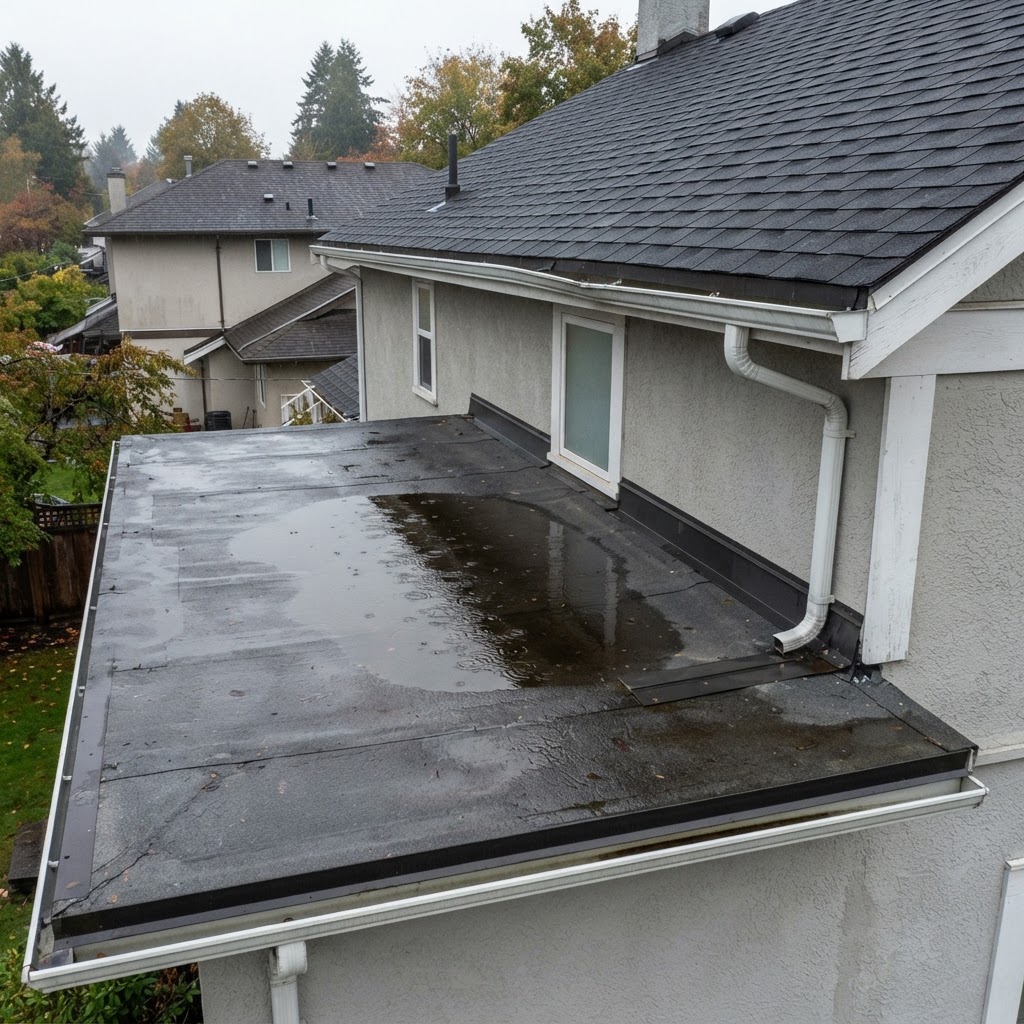
What Is a Low-Slope or Flat Roof Section?
A low-slope roof has little or no pitch — it is nearly flat, or only gently sloped. While commercial buildings often have entirely flat roofs, many residential homes have low-slope sections mixed with their steeper main roof, such as:
- Porch roofs
- Room additions and extensions
- Dormers (though some are steeper)
- Garages and carports
- Sunrooms and enclosed patios
- Over bay windows or entryways
These sections are common on Northern Virginia homes and are just as important to keep watertight as the main roof.
Why Low-Slope Roofs Are Different From Shingle Roofs
Here is the critical point: standard asphalt shingles are not designed for low-slope or flat roofs. Shingles rely on gravity and sufficient pitch to shed water quickly. On a low-slope surface, water moves slowly or pools, and shingles can allow water to seep underneath. Low-slope roofs therefore require different roofing materials and systems designed to be watertight at minimal pitch — such as membrane systems and other low-slope materials. Using the wrong material — like putting standard shingles on a near-flat porch roof — is a common mistake that leads to leaks. This is why low-slope sections require specialized knowledge.
The #1 Problem With Low-Slope Roofs: Ponding Water
The biggest challenge for flat and low-slope roofs is ponding water — water that does not drain and instead sits on the surface. Standing water is a roof’s enemy: it stresses the roofing material, finds weak points, and eventually leads to leaks. Proper low-slope roofing is designed to drain water effectively and resist ponding, which requires correct installation and the right materials.
Common Low-Slope Roof Problems in Northern Virginia
- Ponding water that does not drain properly
- Leaks at seams, flashing, and transitions
- Membrane damage — cracks, punctures, or separation
- Failed seals at the edges and where the low-slope section meets the main roof or walls
- Debris accumulation that blocks drainage
- Wear from NoVA’s weather — sun, heat, and freeze-thaw cycles
The Vulnerable Transition Points
Low-slope sections often create tricky transitions — where a porch roof meets the house wall, where an addition’s roof joins the main roof, or around a dormer. These transitions require careful flashing and are common leak points. A professional roofer knows how to properly flash and seal these junctions to keep them watertight.
Signs Your Low-Slope Roof Needs Repair
- Leaks or water stains below a porch, addition, dormer, or flat section
- Ponding water that lingers after rain
- Visible damage to the roofing membrane or material
- Separation or cracks at seams and edges
- Debris buildup blocking drainage
- Aging or deteriorated low-slope roofing material
Why Low-Slope Roof Repair Requires Expertise
Repairing a low-slope roof is not the same as repairing a shingle roof. It requires understanding low-slope roofing systems, proper materials, correct drainage, and skilled flashing at transitions. An inexperienced roofer — or a homeowner attempting a DIY fix with the wrong materials — often makes the problem worse. This is specialized work that calls for a knowledgeable contractor.
Don’t Overlook Your Low-Slope Sections
Because they are often smaller and less visible, low-slope roof sections are easy to neglect — until they leak. But a leaking porch or addition roof causes the same water damage as any other leak. Regular inspection and prompt repair of these areas is just as important as caring for your main roof.
How Sam Construction Group USA Handles Low-Slope Roofing
Sam Construction Group USA, a licensed and insured Fairfax, VA roofing and restoration contractor, repairs and installs residential low-slope and flat roof sections across Northern Virginia — using the right materials for minimal pitch, ensuring proper drainage, and expertly flashing the transitions where these sections meet the rest of your home. Whether it is a porch, addition, dormer, or garage, we keep your low-slope roofing watertight.
Have a leaking porch, addition, or flat roof section? Call Sam Construction Group USA at (571) 294-4977 for a free inspection.
Book My Free InspectionFrequently Asked Questions
What is a low-slope or flat roof section on a home?
A roof section with little or no pitch — nearly flat or only gently sloped. On residential homes these are common over porch roofs, room additions, dormers, garages, sunrooms, and bay windows, mixed in with the steeper main roof.
Why can’t you use standard shingles on a low-slope roof?
Standard asphalt shingles rely on gravity and sufficient pitch to shed water quickly. On a low-slope surface water moves slowly or pools, and shingles can allow water to seep underneath. Low-slope roofs need specialized materials and systems designed to be watertight at minimal pitch.
What is ponding water and why is it a problem?
Ponding water is water that does not drain and sits on the roof surface. It stresses the roofing material, finds weak points, and eventually leads to leaks — which is why correct drainage and the right materials matter so much on flat and low-slope roofs.
Why do low-slope roof repairs need a specialist?
They require understanding low-slope roofing systems, the right materials, correct drainage, and skilled flashing at the transitions where the low-slope section meets the main roof or walls. DIY fixes with the wrong materials usually make it worse. Free inspections: (571) 294-4977.
Keep Every Roof Section Watertight
Sam Construction Group USA, a licensed and insured Fairfax, VA roofing and restoration contractor, repairs and installs residential low-slope and flat roof sections across Northern Virginia. Call (571) 294-4977.
Book My Free Inspection