
How Northern Virginia’s Humidity Affects Your Roof, Shingles & Attic
Northern Virginia’s high humidity affects your roof by promoting moisture buildup in the attic, encouraging mold and rot, accelerating algae and moss growth on shingles, and stressing roofing materials — especially when ventilation is poor.
Quick Answer: The 90-Second Summary
- Humidity promotes attic moisture, which is the root of many roof problems.
- Trapped moisture causes mold, mildew, and wood rot in decking and framing.
- Humidity plus shade grows algae (black streaks) and moss on shingles.
- Humidity problems and ventilation problems go hand in hand — fix both together.
- For a free moisture and ventilation inspection, call Sam Construction Group USA: (571) 294-4977.
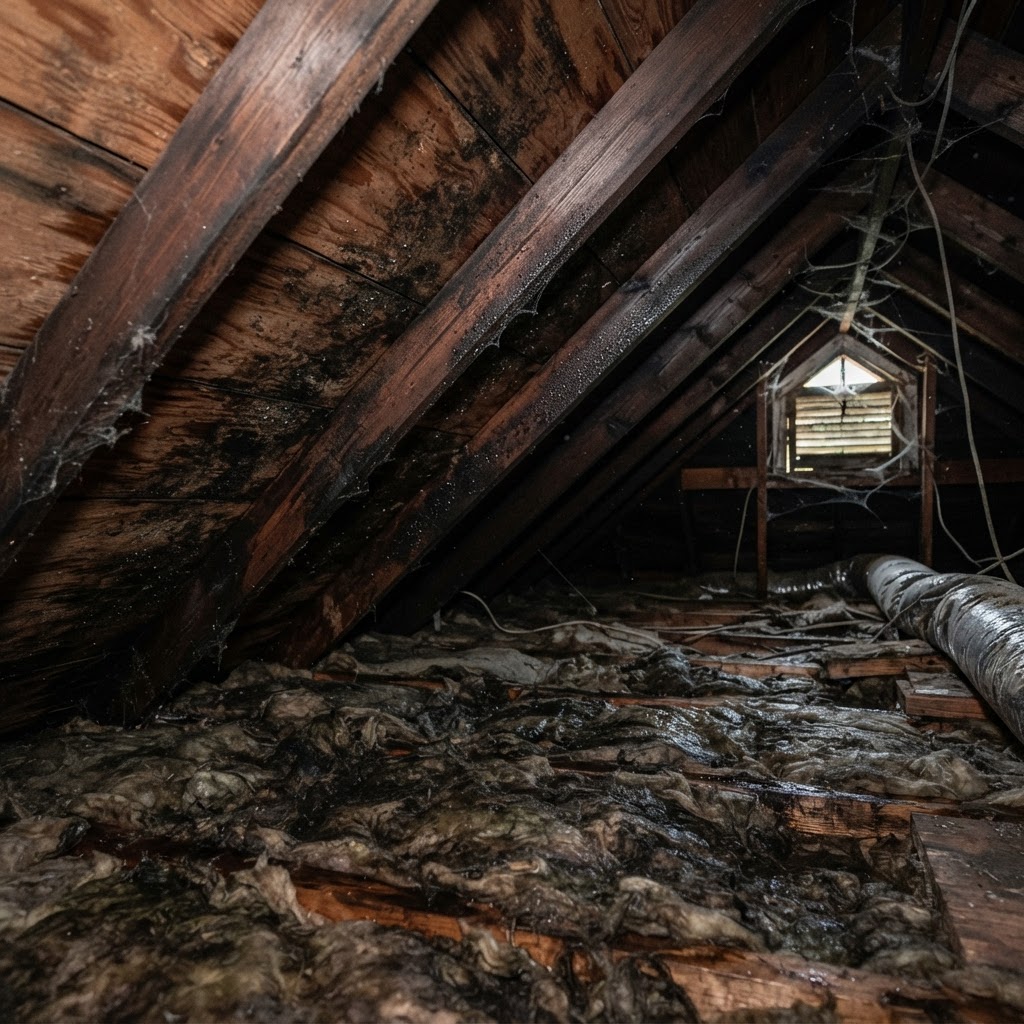
How Humidity Affects Your Roof and Attic
- Moisture buildup in the attic. High outdoor humidity, combined with everyday moisture from inside your home, can accumulate in the attic — especially when ventilation is inadequate. This attic moisture is the root of many humidity-related roof problems.
- Mold, mildew, and wood rot. Trapped moisture creates the perfect conditions for mold and mildew growth and, over time, wood rot in the roof decking and framing. This damages the roof’s structure from within, often unseen until it is serious.
- Algae and moss on shingles. Humidity, combined with shade from Northern Virginia’s heavy tree cover, encourages algae (the black streaks you see on roofs) and moss to grow on shingles. Moss in particular holds moisture against the roof surface, accelerating deterioration.
- Stress on roofing materials. The cycle of humidity, heat, and moisture stresses shingles and roofing components, contributing to faster aging — especially when the attic cannot breathe.
Why Poor Ventilation Makes Humidity Damage Worse
Here is the key connection: humidity problems and ventilation problems go hand in hand. A properly ventilated attic exhausts humid air before it can condense and cause damage. A poorly ventilated attic traps that moisture, amplifying every humidity-related problem — mold, rot, and premature roof aging. This is why managing humidity is largely about proper roof and attic ventilation.
Signs of Humidity-Related Roof Problems
- Musty smells in the attic or upstairs
- Visible mold or mildew on attic surfaces
- Damp or discolored attic insulation
- Condensation or frost in the attic
- Black streaks (algae) or moss on the roof
- Wood rot in decking or framing
- Higher indoor humidity in certain rooms
How to Protect Your Roof From Humidity Damage
- Ensure proper attic ventilation — the single most important defense
- Address attic insulation to help manage moisture and temperature
- Treat algae and moss properly — never pressure wash, which damages shingles
- Clean gutters and remove debris so water drains away
- Get regular professional inspections to catch moisture problems early
- Repair leaks promptly before they add to attic moisture
The Virginia Roofing Challenge
Northern Virginia’s combination of humidity, heat, storms, and tree cover makes moisture management essential to a roof’s health and lifespan. Roofs here work hard, and staying ahead of humidity-related issues is a key part of protecting your investment.
How Sam Construction Group USA Helps
Sam Construction Group USA, a licensed and insured Fairfax, VA roofing and restoration contractor, evaluates ventilation, moisture, algae, and roof condition across Northern Virginia — identifying and addressing the humidity-related problems that quietly damage roofs. We help you keep your roof, shingles, and attic healthy in the NoVA climate.
Worried about humidity and moisture damaging your roof? Call Sam Construction Group USA at (571) 294-4977 for a free inspection.
Book My Free InspectionFrequently Asked Questions
How does humidity damage a roof in Northern Virginia?
High humidity promotes moisture buildup in the attic, encouraging mold, mildew, and wood rot in the decking and framing. It also encourages algae (the black streaks on roofs) and moss growth on shingles, and stresses roofing materials — especially when the attic cannot breathe.
Why does poor ventilation make humidity problems worse?
A properly ventilated attic exhausts humid air before it can condense and cause damage. A poorly ventilated attic traps that moisture, amplifying every humidity-related problem — mold, rot, and premature roof aging.
What are the signs of humidity-related roof problems?
Musty smells in the attic or upstairs, visible mold or mildew on attic surfaces, damp or discolored insulation, condensation or frost in the attic, black algae streaks or moss on the roof, wood rot in decking or framing, and higher indoor humidity in certain rooms.
How do I protect my roof from humidity damage?
Ensure proper attic ventilation first, then address insulation, treat algae and moss safely (never pressure wash), keep gutters and the roof clear of debris, and get regular professional inspections. Sam Construction Group USA evaluates ventilation and moisture across Northern Virginia: (571) 294-4977.
Keep Moisture Out of Your Roof System
Sam Construction Group USA, a licensed and insured Fairfax, VA roofing and restoration contractor, evaluates ventilation, moisture, and roof condition across Northern Virginia. Call (571) 294-4977.
Request My Free Inspection