
Metal Roofing vs Asphalt Shingles: An Honest Side-by-Side Comparison
One roof lasts twice as long and costs two to three times more up front. We compare metal and architectural asphalt across cost, lifespan, storms, energy, and resale — without the hype.
Quick Answer — Metal or Asphalt?
- Choose architectural asphalt for the lowest upfront cost and a classic, predictable 20–30 year cycle.
- Choose standing seam metal for a 40–70 year lifespan, better storm and fire performance, and lower lifetime cost.
- Metal typically costs two to three times more installed — about $11,000–$17,000 for asphalt in Northern Virginia, well above that for metal.
- Over 50 years, asphalt usually means two re-roofs; metal usually means one.
- Both offer UL 2218 Class 4 impact options — installation quality decides most storm outcomes.
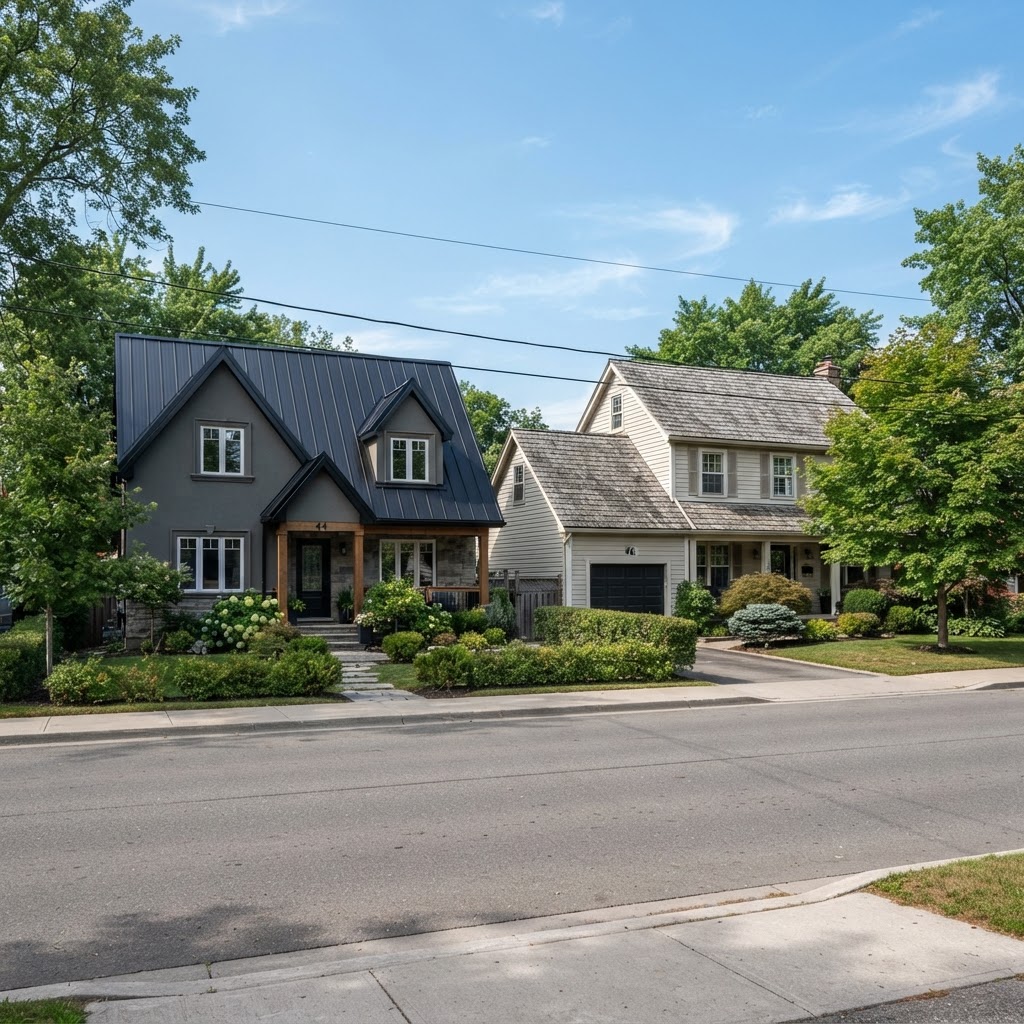
How Do Costs Compare Upfront and Over 50 Years?
Talk in cost per square — one 100-square-foot roofing unit — and the gap becomes clear. Architectural asphalt commonly installs for a few hundred dollars per square; standing seam metal frequently runs two to three times that once fabrication, clips, and detail work are counted. On a typical Northern Virginia home, that lands an architectural asphalt replacement around $11,000 to $17,000 and a quality metal roof well above it.
The honest comparison is lifetime cost. An asphalt roof lasting 20 to 30 years will likely be replaced twice across 50 years, with the second project priced at future labor rates. A metal roof installed once often never needs a second purchase — which narrows the lifetime gap even though the first invoice is larger.
| Factor | Standing Seam Metal | Architectural Asphalt |
|---|---|---|
| Upfront installed cost | 2–3× higher per square | Lowest upfront option |
| Expected lifespan | 40–70 years | 20–30 years |
| Wind uplift | Excellent with concealed clip systems | Very good when nailed to code |
| Impact resistance | Class 4 options available | Class 4 options available |
| Energy performance | Reflective cool pigments; above-sheathing ventilation | Standard colors absorb more heat |
| Maintenance | Occasional fastener and finish checks | Periodic flashing checks and shingle repair |
| Weight | Light: roughly 1–2 lb per sq ft | Moderate: roughly 3–4 lb per sq ft |
A metal roof is a 50-year decision and an asphalt roof is a 25-year decision. Neither answer is wrong — just budget for the cycle you are actually choosing.
— Sam Construction Group USA, Fairfax roofing & restoration team
Which One Actually Lasts Longer?
Asphalt shingle life is mostly an attic story. Heat and moisture that cannot escape through balanced ventilation bake shingles from beneath and cut years off the product rating. Shade, algae, and hail take their toll from above. Installed correctly and ventilated well, architectural shingles deliver their full 20 to 30 year run.
Metal’s longevity comes from the coating. Galvalume steel, an aluminum-zinc-coated sheet, resists corrosion for decades, and a Kynar finish holds color and chalk resistance far longer than commodity paint. Standing seam panels with concealed clips also avoid the exposed fastener gaskets that eventually age out on cheaper metal roofs.
What Is Oil Canning and Does It Matter?
Oil canning is a visible waviness or ripple in flat metal panels, caused by stress in the metal, the deck, or the fastening system. It is cosmetic, not structural, but wide flat pans show it more than narrow ribs do. Discuss panel design and deck condition with your installer before you sign so the look does not surprise you.
End-of-life stories differ, too. A weathered asphalt roof is repaired in sections and eventually replaced; a faded metal roof can often be retained and refinished, and standing seam systems accept new coatings well. Both paths are legitimate — one trades a shorter cycle for lower cost, and the other buys decades and keeps them.
Which One Handles Storms Better?
Wind uplift is about edges, fastening, and the roof as a system. Asphalt roofs that follow code nailing patterns, use properly rated starter courses, and detail edges correctly hold their own in severe storms — most wind damage starts at flashing and perimeter details rather than field shingles. Metal’s interlocking panels and clip systems achieve some of the highest uplift ratings available.
Hail is a different scorecard. Under the UL 2218 impact test, Class 4 is the top rating, and both steel metal panels and reinforced asphalt shingles can earn it. Metal may dent cosmetically under large hail while continuing to shed water; asphalt tends to lose granules and crack, which quietly shortens its remaining life.
Wind damage is rarely about the shingle or panel itself. It is about edge detailing, fastening, and flashing — whichever product is on the roof.
— Production Foreman, Sam Construction Group USA
Fire is metal’s quiet advantage: the panels are noncombustible, while asphalt carries a Class A rating when tested as a system. In ember-exposed areas that matters. In suburban Northern Virginia, both meet the code minimums insurers expect.
What About Energy Efficiency and Comfort?
Metal reflects and re-emits solar heat, especially in lighter colors or with cool-roof pigments that reflect infrared energy even in darker shades. Add above-sheathing ventilation — an air gap between the deck and the panels — and a meaningful slice of summer heat never reaches the attic at all. The Department of Energy credits reflective roof choices with double-digit percentage cooling savings on single-story homes.
Asphalt shingles absorb heat by design, and a dark roof in July sends a hot deck straight into the attic. The countermeasures matter on any roof: balanced ventilation, a well-insulated attic floor, and ductwork kept out of the attic where possible.
Does a Metal Roof Make Your Home Colder in Winter?
No. A roof is a weather barrier, not an insulation layer, and winter comfort comes from attic insulation and air sealing under either product. A metal roof simply sheds snow faster, which can reduce ice damming at the eaves when the attic below is properly sealed.
How Do Maintenance, Weight, and Noise Compare?
Asphalt maintenance is familiar: replace the occasional lifted shingle, keep flashing tight, and keep gutters clear. Metal maintenance is lighter still — inspect sealants at penetrations, check any exposed fasteners, and wash the finish if debris accumulates.
Weight surprises people. Standing seam metal runs roughly 1 to 2 pounds per square foot, lighter than the 3 to 4 pounds of architectural asphalt, and neither product normally requires structural reinforcement on a code-built home. Metal’s low weight is one reason it can sometimes install over an existing roof where codes allow it.
Is a Metal Roof Really Noisy When It Rains?
Over a solid deck with quality underlayment, a metal roof is roughly as quiet as a shingle roof — the barn-roof racket people remember comes from metal installed over open framing. On a normal home, the difference is subtle enough that most owners stop noticing within the first storm or two.
One caution: exposed-fastener panels cost much less than standing seam but rely on gaskets that age, and they show oil canning more often. If a metal bid looks too good, ask whether it is standing seam with concealed clips.
What About Resale Value and Curb Appeal?
Remodeling Magazine’s Cost vs. Value Report has long put roof replacement recoup near 60 percent, which means a new asphalt roof primarily protects your price rather than adding profit above it. Buyers discount heavily for an old roof; they rarely pay a premium above market for a new standard one.
Metal plays a different resale game. A standing seam roof signals durability and energy performance to buyers who plan to stay, and in neighborhoods where metal is common it can support a listing premium. On a street of colonials with architectural shingles, a bold metal roof may simply read as different — check your HOA covenants before you commit.
Which Roof Is Right for Your Home?
Work the decision like an estimate, not a feeling. Before you sign anything:
- Write down your honest time horizon — how many years you expect to stay in the house.
- Budget both ways: the asphalt price today versus the metal price spread across 50 years.
- Rank your storm priorities: wind, hail, fire, and the insurance discounts Class 4 products can earn.
- Check HOA covenants and neighborhood norms for color and material rules.
- Get itemized written bids for both products on the same scope of work.
For most homeowners, the framework lands in one of two places:
- Choose standing seam metal if you plan to stay long-term, want a 40–70 year roof, prize low maintenance, or are planning solar panels that can clamp to seams without penetrations.
- Choose architectural asphalt if you want the lowest upfront cost, a traditional look, a predictable replacement cycle, or a roof you can repair in small sections.
There is no universal winner, and anyone who says otherwise is selling something. Get both bids itemized on identical scopes and let the numbers on your actual house — not a national average — make the call.
Metal vs Asphalt — Frequently Asked Questions
Is a metal roof worth the extra cost?
Usually, yes — if you will stay in the home long enough to use its 40–70 year lifespan. Metal costs two to three times more upfront but avoids the second re-roof asphalt budgets expect. Sell within a decade, and architectural asphalt usually wins the math.
Can you install a metal roof over existing shingles?
Often, yes — metal’s low weight makes over-install possible where codes allow one existing layer. The deck underneath still needs inspection, and a quality underlayment is essential. Your contractor should verify local rules before quoting the shortcut.
Will a metal roof rust or fade?
Modern Galvalume steel and Kynar-finished panels are engineered specifically against rust and fading for decades. Cut edges and scratched surfaces deserve touch-up paint, and coastal salt air shortens any coating’s life. Ask which finish system is in your bid.
Which roof handles hail better?
Both can earn a UL 2218 Class 4 impact rating. Large hail may dent metal cosmetically while the roof keeps shedding water; asphalt tends to lose granules and crack, which can shorten its remaining life. Ask your insurer whether Class 4 products earn a premium discount.
Will a metal roof raise my home’s resale value?
Modestly, and mostly through durability and energy appeal. Roof replacement recoup sits near 60 percent industry-wide, and metal’s premium depends on buyers who value 40-plus-year roofs in your market. Choose a color and profile that fit the neighborhood to protect resale.
Price Both Roofs on Your Actual Home
Sam Construction Group USA installs architectural asphalt and standing seam metal across Northern Virginia, quoted on the same scope so the comparison is honest. Ask us which roof fits your timeline, budget, and street.
☎ (571) 373-6388This article is general information for Northern Virginia property owners and is not a quote or a statement of any specific product’s terms. Costs, lifespans, and savings vary by home, climate, and product line — always confirm specifications for your own project. Free inspections: (571) 373-6388.