
Slate, Tile, Cedar & Metal: Premium Roofs for Northern Virginia Homes
For a distinctive home, the roof is part of the architecture — and premium materials can last generations. Here’s an honest look at slate, clay and concrete tile, cedar shake, and standing-seam metal: how long they last, what they weigh, and the trade-offs that matter for a Northern Virginia home.
Quick Answer: Premium Roofing, Compared
- Premium materials — slate, clay/concrete tile, cedar shake, and standing-seam metal — go well beyond standard asphalt in lifespan and character.
- Slate lasts the longest (often 75–100+ years) and looks unmatched, but it’s heavy and demands expert installation.
- Tile is extremely durable and distinctive; like slate, it’s heavy and needs a structure built to carry it.
- Cedar offers a warm, natural look but needs upkeep — and NoVA’s shade and moisture are hard on it.
- Standing-seam metal is long-lasting, low-maintenance, and modern, and sheds water and snow beautifully.
- The right choice depends on your home — its architecture, structure, and setting. Start with an assessment: (571) 373-6388.
Most homes wear asphalt shingles, and for good reason — they’re affordable, reliable, and versatile. But for a distinctive or higher-end home, the roof is a defining architectural element, and premium materials can deliver a look and a lifespan that asphalt can’t. If you’re weighing slate, tile, cedar, or standing-seam metal for a Northern Virginia home, here’s what actually separates them — including the honest trade-offs a good contractor will tell you up front.
What counts as a premium roofing material?
These materials share two things: they last longer than standard asphalt, and they make a stronger architectural statement. Where they differ — dramatically — is in weight, maintenance, cost, and the kind of home each suits. The starting point for any of them is honest: does your home’s structure and style actually fit the material?
How long do premium roofs last compared to asphalt?
| Material | Typical lifespan | Weight | Character |
|---|---|---|---|
| Asphalt shingle (for comparison) | ~15–30 years | Light | Versatile, everyday |
| Cedar shake / shingle | ~30–40 years | Moderate | Warm, natural, rustic |
| Standing-seam metal | ~40–70 years | Light–moderate | Clean, modern, sleek |
| Clay / concrete tile | ~50–100 years | Heavy | Mediterranean, distinctive |
| Natural slate | ~75–100+ years | Very heavy | Timeless, estate-grade |
Lifespans are typical industry estimates and vary with installation, maintenance, ventilation, and exposure.
Slate roofing: pros and cons
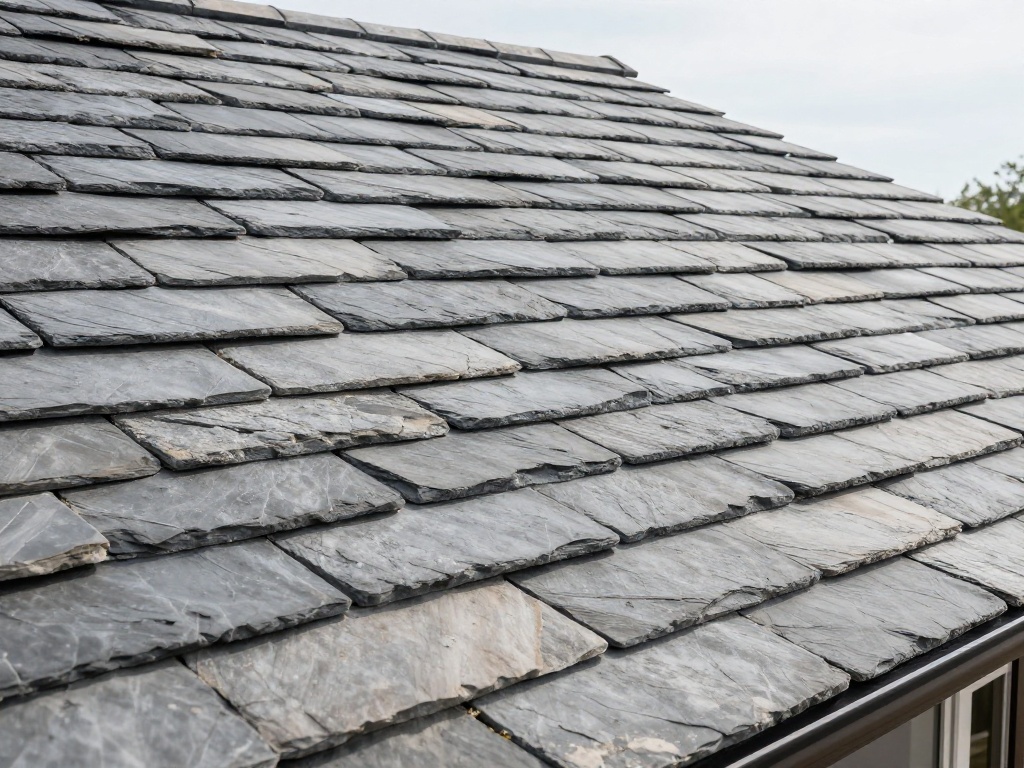
Natural Slate
Exceptional lifespan (often a century), unmatched timeless appearance, fire-resistant, and highly durable against weather.
Very heavy — often requires structural reinforcement; premium cost; fragile to walk on; and it demands genuine slate-specific expertise to install and repair.
Slate is the benchmark for prestige roofing. On the right home — and the right structure — it can outlast the mortgage several times over. The catch is that its weight and installation requirements are unforgiving: slate is not a material for a general crew, and matching or sourcing replacement slate later takes know-how.
Clay & concrete tile: pros and cons
Clay & Concrete Tile
Very long lifespan, distinctive architectural look, excellent durability, and strong resistance to fire and rot.
Heavy like slate — structure must support it; individual tiles can crack under impact; and in our climate, freeze-thaw cycles make quality and proper installation especially important.
Tile brings a Mediterranean or Spanish-influenced character that stands out beautifully on the right architecture. In Northern Virginia’s freeze-thaw climate, material quality and correct installation matter more than in milder regions, since water intrusion and freezing are what crack lesser tiles over time.
Cedar shake & shingle: pros and cons
Cedar Shake & Shingle
Warm, natural, high-end appearance that weathers attractively; good insulating character; a classic look for certain architectural styles.
Needs ongoing maintenance; vulnerable to moss, rot, and moisture — a real concern on NoVA’s shaded, wooded lots; and fire resistance depends on treatment.
Cedar’s natural beauty is hard to replicate, but it’s the most maintenance-dependent of the premium options. In the shaded, tree-heavy parts of Northern Virginia — where roofs stay damp — cedar needs attentive upkeep to reach its potential lifespan, or it will decline faster than expected.
Standing-seam metal: pros and cons
Standing-Seam Metal
Long lifespan, very low maintenance, sheds rain and snow exceptionally well, reflects heat for energy efficiency, and offers a clean modern or farmhouse look.
Higher upfront cost than asphalt; requires experienced installation for the concealed-fastener seams; and it expands and contracts, which proper detailing must accommodate.
Standing-seam metal has moved well beyond barns — it’s now a sought-after look on both contemporary and farmhouse-style homes. Its concealed fasteners and interlocking seams make it durable and weather-tight, but that same construction is exactly why installation expertise matters so much.
“There’s no single ‘best’ premium roof — there’s the right one for your house. The first question isn’t which looks nicest, it’s what your structure can carry and what your architecture is asking for. Put slate on a frame that can’t hold it and you’ve bought a problem, not a heirloom.”
— Sam Construction Group, Fairfax roofing & restoration team
Which premium roof is right for a Northern Virginia home?
A few local considerations worth weighing:
- Structure first. Slate and tile are heavy; confirming the home can support the load is step one, not an afterthought.
- Setting matters. Heavily shaded, wooded lots are tough on cedar and encourage moss on any material — worth factoring in.
- Architecture. The material should suit the home’s style; the best premium roof is one that looks like it belongs.
- HOA & neighborhood. Some communities have material and appearance guidelines worth checking before you commit.
- Time horizon. If this is your forever home, a century-class roof is a different calculation than a shorter stay.
⚠️ The installation is as important as the material
Premium materials are only as good as the crew installing them. Slate, tile, cedar, and standing-seam metal each require specific expertise — a beautiful material installed poorly will fail early. Always confirm real experience with the specific material you’re choosing.
Thinking about a premium roof for your home?
Start with an honest assessment — of your home’s structure, style, and setting — so the material fits the house. Free, no-obligation.
Frequently asked questions about premium roofing
Is a premium roof worth it?
It depends on your home and your time horizon. For a distinctive or higher-end home you plan to keep, the longevity, curb appeal, and architectural fit of a premium roof can absolutely justify the investment. For a shorter stay, the math is different. An honest assessment helps you weigh it.
Can any home get a slate or tile roof?
Not automatically. Slate and tile are heavy, so the home’s structure must be able to carry the load — sometimes reinforcement is needed. Determining structural capacity is an essential first step before choosing either material.
How does Northern Virginia’s climate affect premium roofs?
Our freeze-thaw cycles make material quality and correct installation especially important for tile, while shade and moisture on wooded lots are hard on cedar. Metal and slate handle the climate very well when properly installed.
Do premium roofs still need maintenance?
Some more than others. Cedar needs the most attention; slate, tile, and metal are lower-maintenance but still benefit from periodic inspection — especially of the flashing and any penetrations, which are common leak points on any roof.
Do you install and service premium roofing materials?
We’re glad to assess your home and discuss the premium options that genuinely fit its structure, style, and setting. Call (571) 373-6388 for a free, no-obligation assessment.
Match the Roof to the Home — Start With an Assessment
A premium roof should fit your home’s structure, style, and setting. Sam Construction Group gives you an honest, local assessment so the material you choose is one that belongs.
☎ (571) 373-6388This article is general information for Northern Virginia property owners and is not a substitute for a professional assessment. Lifespan figures are typical industry estimates and vary with installation, maintenance, and conditions. Structural suitability for heavy materials is determined on-site.