
Ridge Vent vs. Other Roof Exhaust Vents: Which Is Best for a Northern Virginia Home?
Ridge vents win for most NoVA roofs — but only when soffit intake is balanced with them. Here is how each exhaust vent actually performs.
Quick Answer: The 90-Second Summary
- A ridge vent is generally the most effective exhaust vent for most Northern Virginia homes.
- It works only when soffit intake vents feed it — ventilation is a balanced system.
- Box vents give spot exhaust; powered vents add moving parts and can pull conditioned air.
- The right choice depends on ridge length, roof complexity, and existing ventilation.
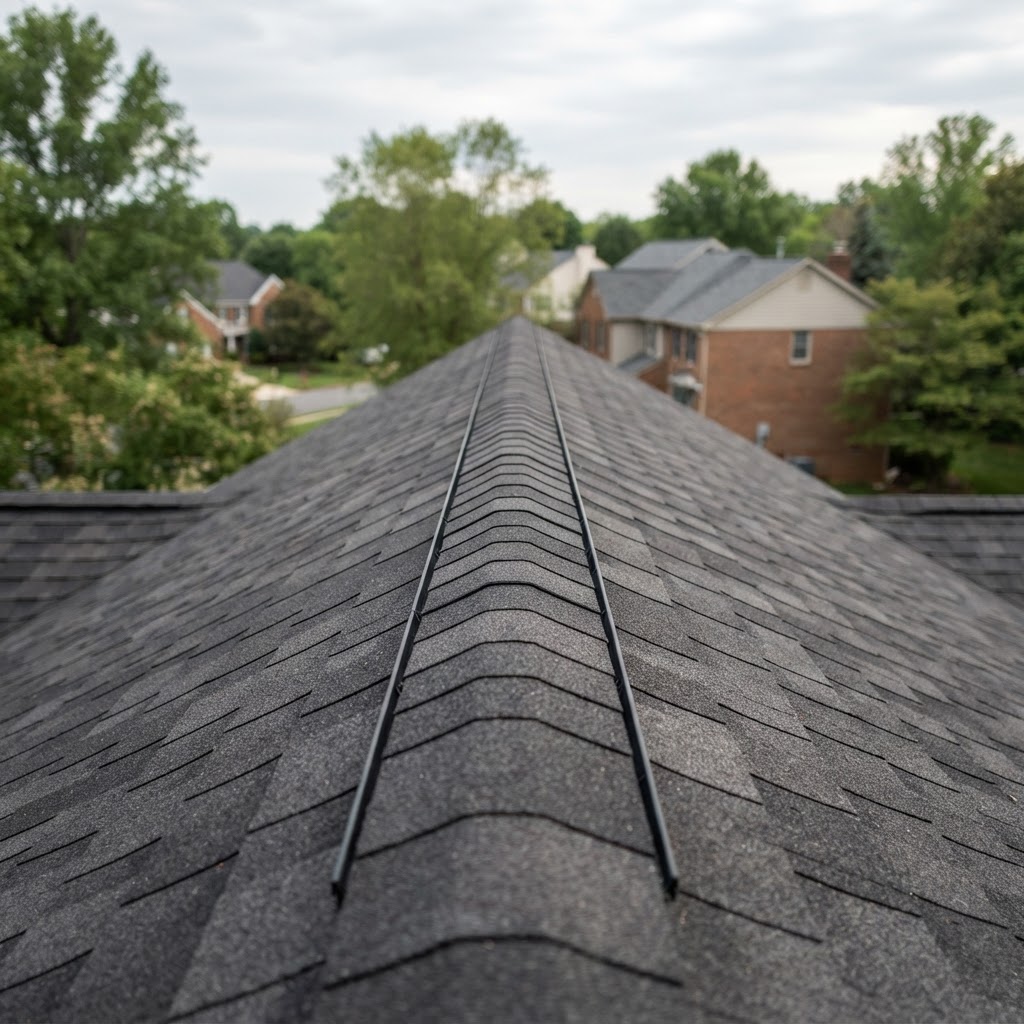
When it comes to roof ventilation, homeowners often ask which type of roof exhaust vent is best — and the ridge vent vs. other roof vents question is one of the most common. Choosing the right exhaust vent affects your roof’s lifespan, your attic’s health, and your energy bills. As a licensed Fairfax, VA roofing and restoration contractor, Sam Construction Group helps Northern Virginia homeowners understand and install the right roof ventilation system.
How Roof Ventilation Works: Exhaust and Intake
Before comparing vent types, it helps to understand that roof ventilation is a balanced system. Air must both enter and exit the attic:
- Intake vents (usually soffit vents at the eaves) let cool air in low
- Exhaust vents (ridge vents, box vents, and others) let warm, moist air out high
For any exhaust vent to work properly, it must be balanced with adequate intake. Too much or too little of either undermines the whole system. This is the foundation of good attic ventilation in Northern Virginia homes.
What Is a Ridge Vent?
A ridge vent is an exhaust vent installed along the peak (ridge) of the roof, running the length of the roofline. It allows warm, moist air to escape continuously along the entire top of the roof. Ridge vents are typically covered by shingles or a matching cap, so they blend in and are nearly invisible from the ground.
Advantages of ridge vents
- Continuous, even airflow across the whole roof
- Effective exhaust because hot air naturally rises to the ridge
- A clean, uniform appearance with no bulky vents dotting the roof
- No moving parts to fail
- Works well paired with soffit intake vents for a balanced system
For these reasons, ridge vents are generally the preferred exhaust vent for most Northern Virginia homes with a suitable roof design.
What Are Box Vents (Static Vents)?
Box vents (also called static vents or louvered vents) are individual exhaust vents installed near the roof peak, each covering a section of the roof. You have likely seen them as small square or dome-shaped vents dotting a roof.
Considerations for box vents
- They provide spot exhaust rather than continuous airflow
- Multiple vents are needed to ventilate a roof adequately
- They are more visible on the roof than ridge vents
- They can be a solution where a continuous ridge vent is not practical
What Are Powered Attic Vents?
Powered attic vents use a fan — electric or solar — to actively pull air out of the attic.
Considerations for powered vents
- They actively move air, which some homeowners consider for very hot attics
- They have moving parts that can fail over time
- If not balanced with adequate intake, they can pull conditioned air from the home or create other issues
- They require a power source
Powered vents have their place in specific situations, but a well-designed passive system — ridge vent plus soffit vents — is effective for most homes.
A ridge vent with blocked, undersized, or missing soffit intake will not perform. Balance is what makes any exhaust vent work — and balance is a calculation, not a guess.
Which Roof Exhaust Vent Is Best for a Northern Virginia Home?
For most Northern Virginia homes, a ridge vent paired with soffit intake vents is the best choice because it provides continuous, balanced, low-maintenance ventilation with a clean appearance. However, the right exhaust vent depends on your specific roof:
- Roof design and ridge length — a continuous ridge is ideal for ridge vents
- Existing ventilation — what intake and exhaust already exist
- Attic conditions — heat and moisture levels
- Roof complexity — some complex roofs have limited ridge length
The most important thing is not just the vent type — it is that the system is balanced, with adequate intake and exhaust working together.
Why Proper Ventilation Matters in Northern Virginia
Good roof ventilation is critical in NoVA’s climate:
- In summer, it exhausts attic heat, reducing cooling loads and protecting shingles from baking
- In winter, it keeps the roof deck cold and even, helping prevent ice dams
- Year-round, it manages moisture, preventing mold, mildew, and wood rot
- It protects your roof’s lifespan and may be required for warranty coverage
Signs Your Roof Ventilation Needs Attention
- Excessive attic heat
- Attic moisture, condensation, or frost
- Ice dams in winter
- Mold or mildew in the attic
- Prematurely aging or curling shingles
- High energy bills
Why a Professional Ventilation Assessment Matters
Choosing and installing the right roof exhaust vent — and balancing it with proper intake — requires professional expertise. A professional assessment from Sam Construction Group evaluates your roof, attic, existing ventilation, and intake-to-exhaust balance, then recommends the right ventilation system for your Northern Virginia home.
Not sure whether your attic is actually breathing? We assess intake and exhaust together.
Request a Free Roof InspectionFrequently Asked Questions About Roof Exhaust Vents
Frequently Asked Questions
Is a ridge vent better than box vents?
For most homes, a ridge vent provides more continuous, even airflow and a cleaner look. Box vents are a solution where a continuous ridge is not practical.
Can I mix different roof vents?
Mixing exhaust vent types can disrupt airflow. A properly designed, balanced system is best — a professional can advise on your specific roof.
Do I need soffit vents with a ridge vent?
Yes. Ridge vents rely on soffit intake vents to work. The system has to be balanced, with adequate intake to match the exhaust.
Does a ridge vent really extend roof life in Northern Virginia?
It helps. Ventilation keeps the attic cooler in summer, colder and drier in winter, and manages moisture year-round — all of which protect shingles and decking.
Roof Ventilation Done Right
Sam Construction Group, a licensed and insured Fairfax, VA roofing and restoration contractor, assesses and installs balanced roof ventilation systems — including ridge vents and proper soffit intake — across Northern Virginia. Call (571) 294-4977 for a free inspection.
Request a Free Roof Inspection