
Roof Leak or Attic Condensation? How to Identify Winter Moisture Problems
If you find moisture in your attic during winter, it could be a roof leak or attic condensation — two different problems with different fixes. A roof leak follows rain and appears at a specific point, while condensation forms widely on cold surfaces from trapped humidity and poor ventilation. A professional inspection from Sam Construction Group USA settles it.
Quick Answer: The 90-Second Summary
- Moisture in the attic has two possible causes — a roof leak or attic condensation — and they need opposite fixes.
- A roof leak follows rain, is concentrated at one spot, and traces to a roof feature like flashing or a penetration.
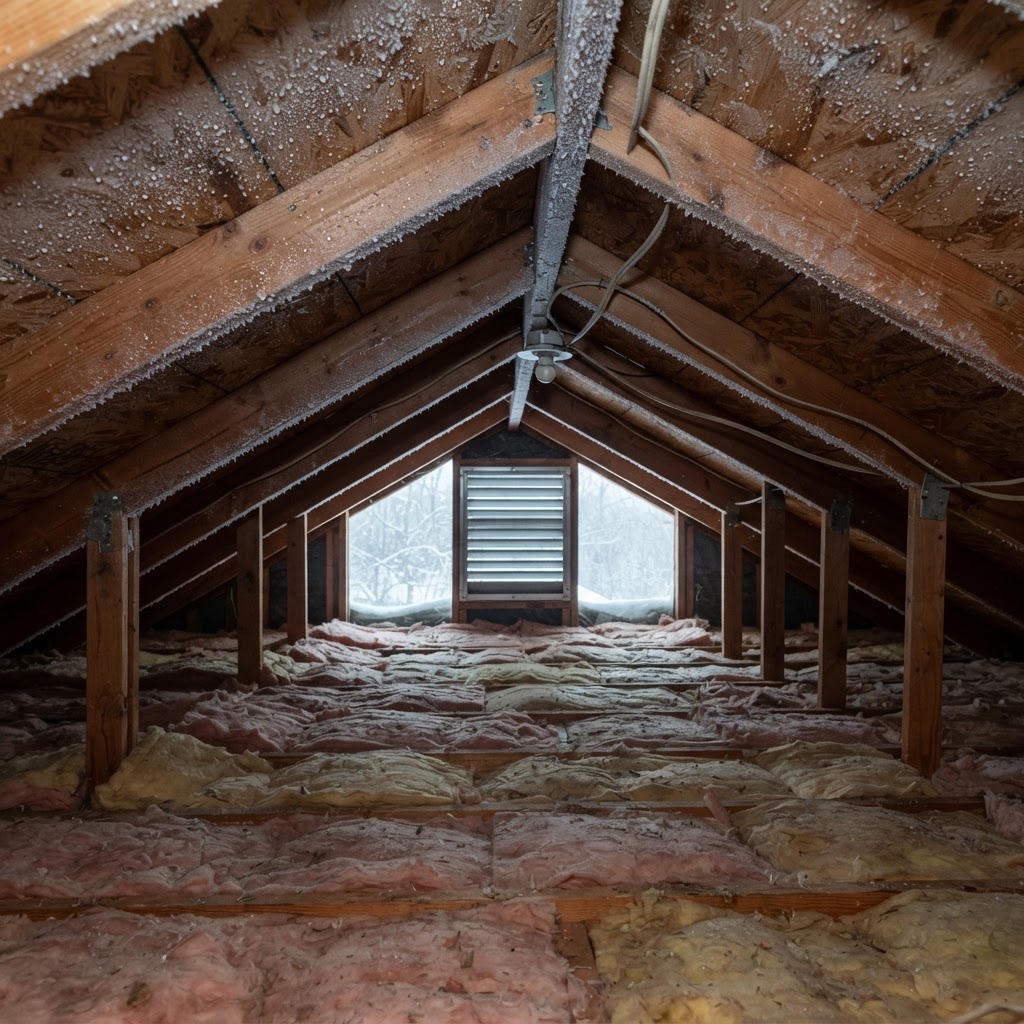
- Condensation is widespread, forms in cold weather regardless of rain, and often shows as frost on the roof deck.
- Diagnosis decides the repair. For an honest assessment, call Sam Construction Group USA: (571) 294-4977.
Why Winter Moisture Problems Are So Confusing
In winter, both roof leaks and condensation can leave your attic damp, stained, or even dripping — which is why homeowners often cannot tell which one they are facing. But the fix for a leak (roofing repair) is very different from the fix for condensation (ventilation and moisture control). Diagnosing the real cause is the essential first step.
What Is a Roof Leak?
A roof leak is water entering from outside — through a failure in the roof system. Signs that point to a roof leak:
- Moisture appears during or after rain or snowmelt
- It is concentrated in a specific spot — a defined stain or drip location
- Staining follows a path down the decking or rafters from a single source
- It worsens with storms and wind-driven rain
- It may trace to a specific feature — a penetration, flashing, or valley above
Roof leaks typically originate at flashing, penetrations, worn seals, or damaged shingles — and because water travels, the entry point may be some distance from where you see the moisture.
What Is Attic Condensation?
Attic condensation is moisture forming inside — when warm, humid air from your home rises into a cold attic and condenses on the cold underside of the roof deck and other surfaces, just like water beading on a cold glass. Signs that point to condensation:
- Moisture is widespread, not concentrated at one point — often appearing as dampness or frost across the underside of the roof deck
- It appears in cold weather regardless of rain
- Frost or water droplets coat the roof deck, nails, and attic surfaces
- It is worst during cold snaps and in homes with high indoor humidity
- It improves with better ventilation and humidity control
Condensation is fundamentally a ventilation and moisture problem, not a roofing failure.
The Key Differences at a Glance
- Roof leak: follows rain or snowmelt, concentrated at a point, traces to a roof feature, worsens with storms.
- Condensation: appears in cold weather regardless of rain, widespread across cold surfaces, tied to indoor humidity and poor ventilation, often shows as frost.
Why Attic Condensation Happens in Northern Virginia Winters
In Northern Virginia’s cold winters, the temperature difference between your warm home and the cold attic is significant. When poor attic ventilation traps humid indoor air (from cooking, showering, and daily living) in the attic, that moisture condenses on the cold roof deck. The result can look alarmingly like a leak — damp decking, water stains, even dripping — but the cause is trapped humidity and inadequate airflow.
Why Proper Diagnosis Matters So Much
Here is the critical point: if you have condensation but “repair” it as a leak, you will never fix the problem — and vice versa.
Patching shingles will not stop condensation caused by poor ventilation, and improving ventilation will not stop water coming through damaged flashing. Misdiagnosis wastes money and leaves the real issue unaddressed, allowing ongoing damage, mold, and wood rot.
How a Professional Identifies the Cause
Distinguishing a leak from condensation requires professional evaluation. Sam Construction Group USA examines the pattern and location of the moisture, inspects the roof for leak sources (flashing, penetrations, shingles), and assesses attic ventilation and humidity. This comprehensive look determines whether you need roofing repairs, a ventilation assessment, or both — and points to the right solution.
The Solutions for Each Problem
- For a roof leak: locate and repair the true source — flashing, penetration, or damaged roofing.
- For condensation: improve attic ventilation (balanced soffit intake and ridge exhaust), address insulation, and reduce indoor humidity sources.
Sometimes a home has both issues, which is why a thorough professional assessment is so valuable.
Solve Your Winter Moisture Problem With Sam Construction Group USA
Sam Construction Group USA, a licensed and insured Fairfax, VA roofing and restoration contractor, helps Northern Virginia homeowners accurately diagnose winter attic moisture — determining whether it is a roof leak, condensation, or both — and recommending the right fix. We look at the whole roof-and-attic system, so you solve the actual problem the first time.
Found moisture in your attic this winter? Call Sam Construction Group USA at (571) 294-4977 for a free inspection and an honest diagnosis.
Book My Free InspectionFrequently Asked Questions
How do I know if I have a roof leak or attic condensation?
A roof leak follows rain or snowmelt and is concentrated at a specific spot, tracing to a roof feature such as flashing or a penetration, and it worsens with storms. Attic condensation appears in cold weather regardless of rain, is widespread across cold surfaces like the roof deck and nails, and often shows as frost — driven by indoor humidity and poor ventilation.
Can attic condensation look like a roof leak?
Yes. In Northern Virginia winters, condensation can leave the attic damp, stained, or even dripping, which is why homeowners often cannot tell the two apart. Because the fixes are completely different — roofing repair versus ventilation and moisture control — professional diagnosis is essential.
Why is attic condensation so common in Northern Virginia?
The temperature difference between a warm home and a cold attic is significant here. When poor attic ventilation traps humid indoor air from cooking, showering, and daily living, that moisture condenses on the cold roof deck. The result looks like a leak but is really trapped humidity and inadequate airflow.
What happens if condensation is repaired as a leak, or the other way around?
You will never fix the problem. Patching shingles will not stop condensation caused by poor ventilation, and improving ventilation will not stop water coming through damaged flashing — leaving ongoing damage, mold, and wood rot. Free inspections: (571) 294-4977.
Find Out What Is Really Causing the Moisture
Sam Construction Group USA, a licensed and insured Fairfax, VA roofing and restoration contractor, diagnoses winter attic moisture across Northern Virginia — leak, condensation, or both — and recommends the right fix. Call (571) 294-4977.
Book My Free Inspection