
Roof Underlayment & Ice-and-Water Shield: The Hidden Layers That Keep NoVA Roofs Dry
Roof underlayment and ice-and-water shield are the hidden protective layers installed beneath your shingles. Underlayment is a secondary water barrier across the whole roof, while ice-and-water shield is a self-sealing membrane at vulnerable areas like eaves and valleys.
Quick Answer: The 90-Second Summary
- Underlayment is the secondary water barrier across the entire roof deck.
- Ice-and-water shield is a self-sealing membrane at eaves, valleys, and penetrations.
- In NoVA it stops ice dam back-up and wind-driven rain — two of the biggest leak causes.
- A roof is only as good as what is beneath the shingles.
- For a roof built right from the deck up, call Sam Construction Group USA: (571) 294-4977.
What Is Roof Underlayment?
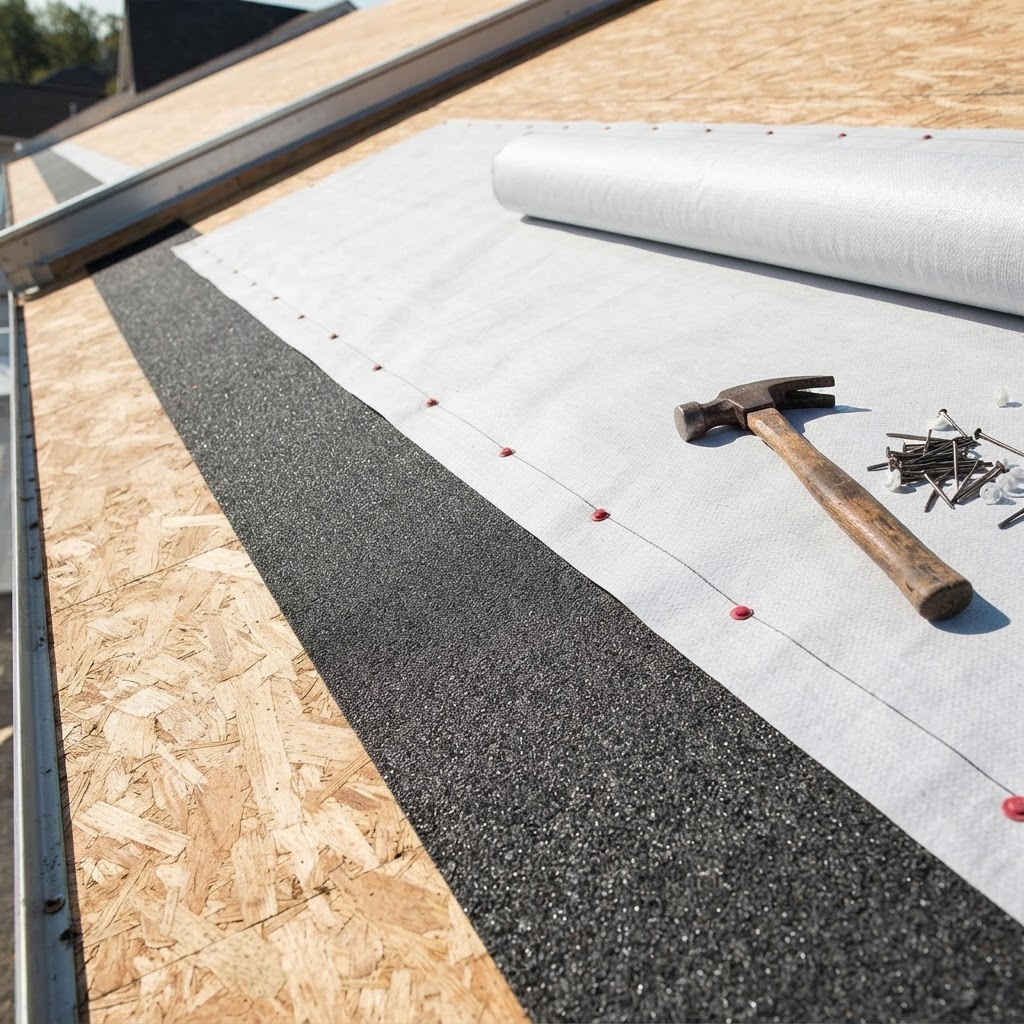
Roof underlayment is a protective layer installed directly on the roof decking, beneath the shingles. It serves as a secondary water barrier — a backup defense that keeps water out if wind-driven rain gets past the shingles. Underlayment covers the entire roof deck, providing continuous protection beneath the visible roofing. Think of your roof as having layers of defense: the shingles are the first line, and the underlayment is the essential second line that catches anything that slips past.
Types of Roof Underlayment
There are two main categories:
- Synthetic underlayment — the modern standard. It is stronger, more tear-resistant, more water-resistant, and more durable than traditional felt. It resists wrinkling and rot, holds up to UV exposure during installation, and often has slip-resistant surfaces for safer installation.
- Felt underlayment (“tar paper”) — the traditional, older option. It is more prone to tearing, absorbing water, wrinkling, and rotting than synthetic.
For a quality, lasting roof, synthetic underlayment is the professional choice — and what Sam Construction Group USA uses on its installations.
What Is Ice-and-Water Shield?
Ice-and-water shield is a specialized, self-sealing waterproof membrane installed at the roof’s most vulnerable areas. Unlike standard underlayment, it has an adhesive backing that seals around roofing nails, creating a watertight barrier exactly where water is most likely to get in. It is typically installed at:
- Eaves (the roof edges) — to protect against ice dams and wind-driven rain
- Valleys — where two roof planes meet and channel heavy water
- Around penetrations — chimneys, skylights, and vents
- Other vulnerable transitions
Why Ice-and-Water Shield Matters in Northern Virginia
Ice-and-water shield is especially valuable in NoVA’s climate for two reasons:
- Ice dam protection. In Northern Virginia’s freeze-thaw winters, ice dams can form at the eaves, forcing water up under the shingles. Ice-and-water shield at the eaves provides a critical self-sealing barrier that blocks this water intrusion — a key defense against winter leaks.
- Wind-driven rain. NoVA’s storms bring wind-driven rain that can push water past shingles at vulnerable points. The self-sealing membrane protects these areas, especially valleys and penetrations where water concentrates.
How These Hidden Layers Work Together
A quality roof is a layered system:
- Roof decking — the structural foundation
- Ice-and-water shield — at the vulnerable, high-risk areas (eaves, valleys, penetrations)
- Underlayment — the secondary water barrier across the rest of the deck
- Flashing — sealing the transitions and penetrations
- Shingles — the first line of defense and the visible surface
Each layer has a job, and together they keep your home dry even when the shingles are challenged by storms and weather. Skipping or skimping on the hidden layers compromises the whole system.
Why These Layers Are Often Where Corners Get Cut
Because underlayment and ice-and-water shield are hidden, they are exactly where a corner-cutting contractor might skimp — using cheap felt instead of synthetic, or skipping ice-and-water shield at vulnerable areas to save money. The homeowner cannot see it, so it is easy to shortchange. But these hidden layers are critical to a roof’s performance and longevity. This is one more reason to choose a reputable, licensed contractor who builds the roof right from the deck up.
Why the Hidden Layers Matter for Your Roof’s Lifespan
A roof is only as good as what is beneath the shingles. Quality underlayment and properly placed ice-and-water shield protect the decking, prevent leaks, and help your roof reach its full lifespan — especially in Northern Virginia’s demanding climate. Investing in these layers is investing in a roof that truly lasts.
Quality Roofing From the Deck Up With Sam Construction Group USA
Sam Construction Group USA, a licensed and insured Fairfax, VA roofing and restoration contractor, builds every roof with quality synthetic underlayment and properly placed ice-and-water shield at all vulnerable areas — the hidden layers that keep Northern Virginia roofs dry through every storm and winter. We never cut corners on what you cannot see, because that is what makes a roof last.
Want a roof built right from the deck up? Call Sam Construction Group USA at (571) 294-4977 for a free inspection and consultation.
Book My Free InspectionFrequently Asked Questions
What is roof underlayment and why does it matter?
Underlayment is a protective layer installed directly on the roof decking beneath the shingles. It acts as a secondary water barrier that keeps water out if wind-driven rain gets past the shingles, providing continuous protection across the entire roof deck.
What is ice-and-water shield?
A specialized, self-sealing waterproof membrane installed at the roof’s most vulnerable areas — eaves, valleys, and around penetrations. Its adhesive backing seals around roofing nails, creating a watertight barrier exactly where water is most likely to get in.
Why does ice-and-water shield matter in Northern Virginia?
Two reasons: our freeze-thaw winters create ice dams at the eaves that force water up under the shingles, and our storms bring wind-driven rain that can push water past shingles. The self-sealing membrane blocks both at the points where water concentrates.
Are synthetic and felt underlayment different?
Yes. Synthetic underlayment is stronger, more tear-resistant, more water-resistant, and more durable, and it resists wrinkling and rot. Felt (“tar paper”) tears, absorbs water, wrinkles, and rots more readily. Sam Construction Group USA uses synthetic underlayment on its installations: (571) 294-4977.
Never Cut Corners on What You Can’t See
Sam Construction Group USA, a licensed and insured Fairfax, VA roofing and restoration contractor, builds every roof with quality synthetic underlayment and properly placed ice-and-water shield at all vulnerable areas. Call (571) 294-4977.
Book My Free Inspection