
Does Your Roof Have Poor Ventilation? Signs to Check Before Replacing It
Signs of poor attic ventilation include excessive attic heat, moisture or condensation, uneven indoor temperatures, ice dams in winter, prematurely aging shingles, and high energy bills. Checking ventilation before replacing your roof ensures the new one lasts.
Quick Answer: The 90-Second Summary
- A new roof over a poorly ventilated attic will not last — trapped heat and moisture age shingles from beneath.
- Watch for attic heat, condensation or frost, uneven upstairs temperatures, ice dams, and curling shingles.
- Ventilation and insulation work as one system and should be evaluated together.
- For a free inspection and ventilation assessment, call Sam Construction Group USA: (571) 294-4977.
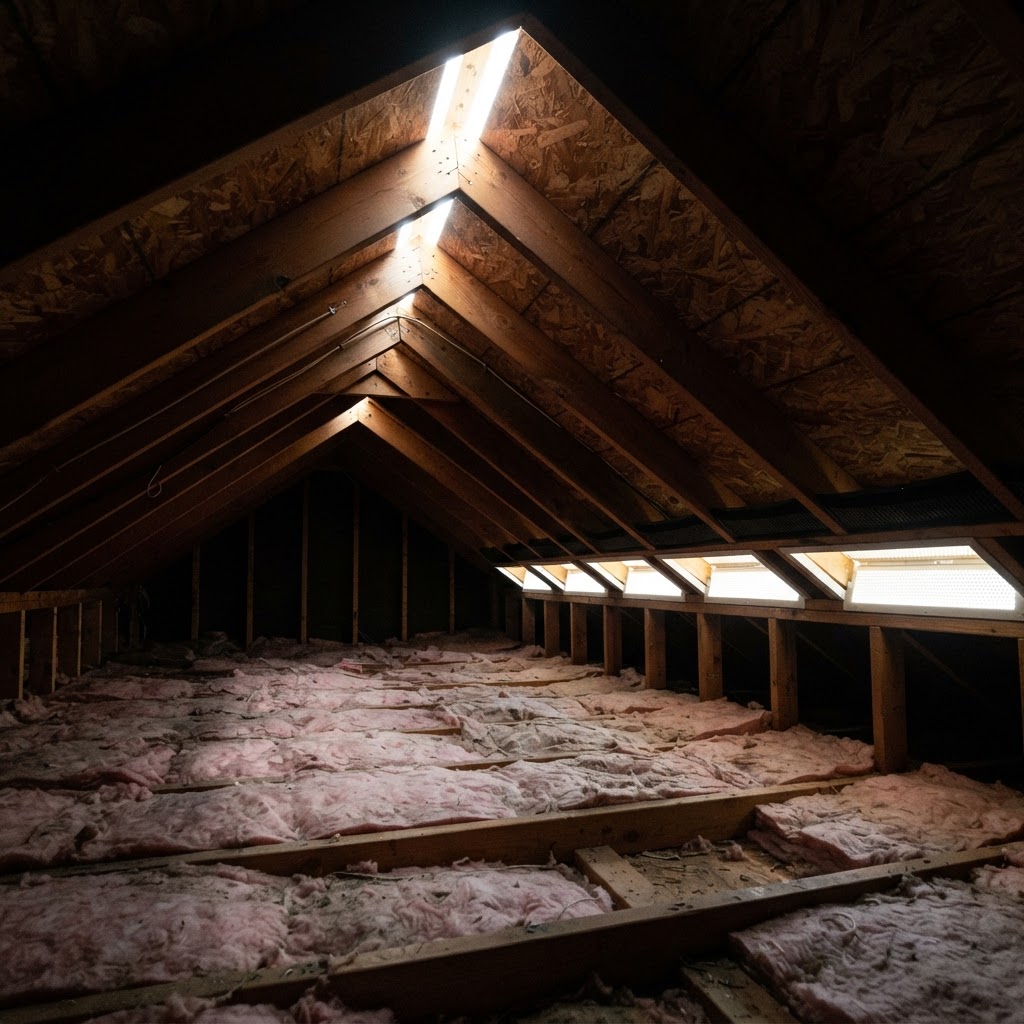
Why Ventilation Matters Before a Roof Replacement
Here is the key insight: a new roof installed over a poorly ventilated attic will not reach its full lifespan.
Trapped heat and moisture age shingles from beneath, cause moisture damage, and can even void the manufacturer’s warranty. Checking and correcting ventilation before or during a roof replacement ensures your new roof performs and lasts as it should. Ventilation should always be evaluated alongside a roof replacement.
Sign 1: Excessive Attic Heat
If your attic feels extremely hot — much hotter than the outside temperature — on a sunny day, that is a classic sign of poor ventilation. A properly ventilated attic exhausts hot air; a poorly ventilated one traps it, which bakes your shingles from beneath and drives up cooling costs.
Sign 2: Moisture, Condensation, or Frost in the Attic
Moisture buildup in the attic — dampness, condensation, or frost on the roof deck and surfaces in cold weather — signals that humid air is trapped and not being exhausted. This moisture leads to mold, mildew, and wood rot, and is a strong indicator of inadequate ventilation.
Sign 3: Uneven Indoor Temperatures
If your upstairs rooms are uncomfortably hot in summer, or temperatures are notably uneven between floors, poor attic ventilation may be contributing. A superheated attic radiates into the rooms below, making the upstairs hard to cool.
Sign 4: Ice Dams in Winter
Ice dams forming at your roof’s edge in winter are often a sign of poor ventilation combined with insulation issues. When escaping heat warms the roof deck unevenly, snow melts and refreezes at the eaves, forming ice dams that force water under the shingles. Proper ventilation helps keep the roof deck cold and even.
Sign 5: Prematurely Aging or Curling Shingles
If your shingles are curling, cracking, or aging faster than expected, trapped attic heat may be cooking them from beneath. Premature shingle deterioration is a common consequence of poor ventilation — and a sign to check before replacing the roof, so the new one does not meet the same fate.
Sign 6: Higher-Than-Expected Energy Bills
A poorly ventilated, superheated attic forces your air conditioning to work harder, raising summer energy bills. If your cooling costs seem high, attic ventilation and insulation may be a factor.
Sign 7: Mold or Mildew in the Attic
Mold or mildew on attic surfaces is a clear sign of trapped moisture and poor ventilation — and a problem that needs addressing for both your roof and your home’s air quality.
Why Ventilation and Insulation Go Together
Ventilation does not work in isolation — it works alongside attic insulation. Insulation blocks heat transfer between your living space and the attic, while ventilation manages the heat and moisture in the attic itself. A proper assessment evaluates both together, since problems often involve both. This is why ventilation should be evaluated as a system, not in isolation.
How Ventilation Should Be Evaluated
A professional ventilation assessment looks at:
- The balance of intake (soffit) and exhaust (ridge) vents
- Whether vents are blocked — soffit vents are often covered by insulation
- Signs of heat and moisture problems in the attic
- The insulation situation alongside ventilation
- Whether the system is adequate for your roof
Getting this balance right requires professional expertise.
Check Ventilation Before You Replace Your Roof
If you are planning a roof replacement, do not overlook ventilation. Correcting ventilation issues as part of the project protects your new roof and maximizes its lifespan — a far better approach than discovering the problem after the new roof is installed.
Professional Ventilation Assessment From Sam Construction Group USA
Sam Construction Group USA, a licensed and insured Fairfax, VA roofing and restoration contractor, assesses attic ventilation and insulation as part of every inspection and roof replacement across Northern Virginia. We identify ventilation problems before they shorten your roof’s life, and ensure your new roof has the balanced ventilation it needs to last.
Planning a roof replacement, or seeing these signs? Call Sam Construction Group USA at (571) 294-4977 for a free inspection and ventilation assessment.
Book My Free InspectionFrequently Asked Questions
What are the signs of poor attic ventilation?
The main signs are excessive attic heat, moisture or condensation or frost in the attic, uneven indoor temperatures between floors, ice dams at the roof edge in winter, shingles that curl or age prematurely, higher-than-expected cooling bills, and mold or mildew on attic surfaces.
Why should I check ventilation before replacing my roof?
A new roof installed over a poorly ventilated attic will not reach its full lifespan. Trapped heat and moisture age shingles from beneath, cause moisture damage, and can even void the manufacturer’s warranty — so ventilation should be corrected before or during the replacement, not discovered afterward.
How do ventilation and insulation work together?
Insulation blocks heat transfer between your living space and the attic, while ventilation manages the heat and moisture inside the attic itself. Problems often involve both, which is why a proper assessment evaluates the ventilation and insulation situation together as one system.
What does a professional ventilation assessment check?
It checks the balance of intake (soffit) and exhaust (ridge) vents, whether vents are blocked — soffit vents are often covered by insulation — signs of heat and moisture problems in the attic, the insulation situation, and whether the system is adequate for your roof. Free inspections: (571) 294-4977.
Fix Ventilation Before You Invest in a New Roof
Sam Construction Group USA, a licensed and insured Fairfax, VA roofing and restoration contractor, assesses attic ventilation and insulation as part of every inspection and roof replacement across Northern Virginia. Call (571) 294-4977.
Book My Free Inspection