
Skylights and Your Roof: Light, Leaks, and What Every Homeowner Should Know
Skylights bring daylight and air into a home \u2014 but they\u2019re also a deliberate hole in your roof, which makes them one of the most common leak points on any roof. Here\u2019s how skylights tie into the roof, why they leak, how to tell the skylight from the flashing, and when a repair or a replacement is the right call.
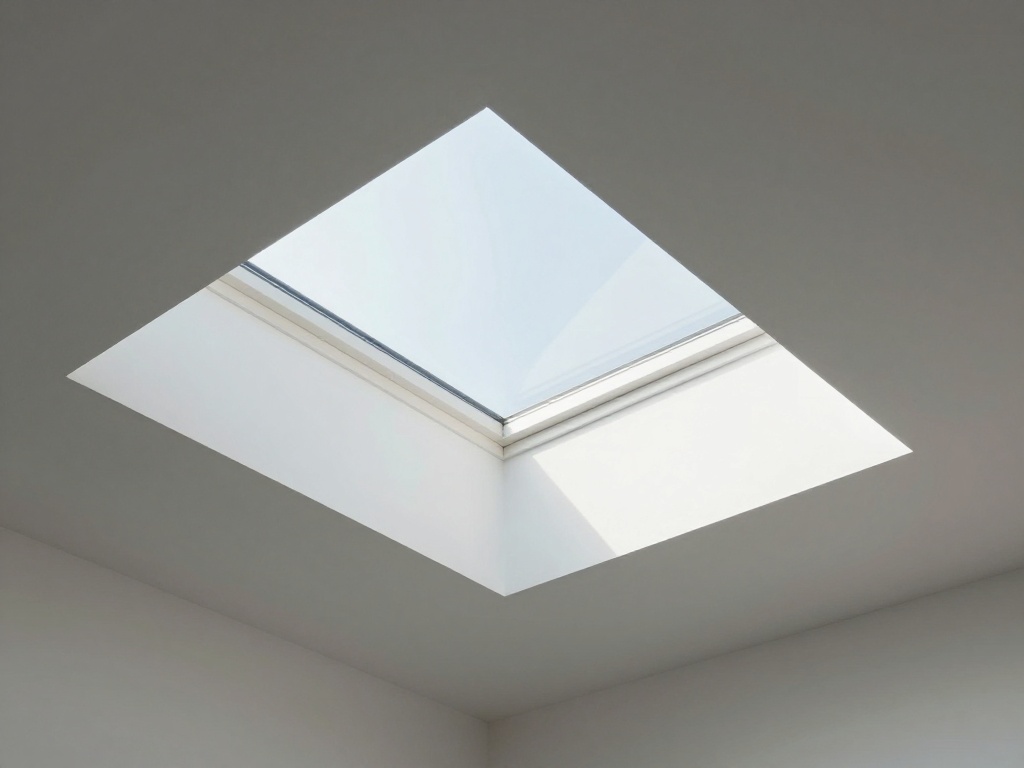
Quick Answer: Skylights and Roof Leaks
- A skylight is a roof penetration. Like a chimney or vent pipe, it cuts through the shingles, underlayment, and decking \u2014 so its waterproofing has to be flawless.
- Most skylight leaks are flashing or seal issues, not the glass. The curb, step flashing, and gaskets are where water usually gets in.
- The leak isn\u2019t always the skylight. A roof leak above the opening can travel down to the skylight and drip there \u2014 misdiagnosing it means fixing the wrong thing.
- A reroof is the right time to address skylights. Reusing a tired skylight under new shingles is how a new roof leaks at the skylight.
- Get a real diagnosis. Book a free inspection with Sam Construction Group at (571) 373-6388.
Few roof features are as loved \u2014 or as feared \u2014 as the skylight. Done right, it floods a kitchen, stairwell, or bath with natural light and can vent warm, humid air. Done wrong, it\u2019s the single most likely spot on a roof to leak. The good news is that modern skylights, installed with proper curbs and integrated flashing kits, are far more reliable than the flat-glass units of a generation ago. Understanding how a skylight connects to the roof is the key to knowing why it leaks \u2014 and how to fix it for good.
What is a skylight, from the roof\u2019s point of view?
There are two broad ways skylights are built into a roof. A deck-mounted(or self-flashing) skylight sits directly on the roof deck with its own integrated flashing flange. A curb-mounted skylight sits on a raised frame \u2014 a curb \u2014 built up from the deck, and the roof\u2019s step flashing weaves into that curb. Either way, the principle is the same: water running down the roof must be guided smoothly around the opening and away, never allowed to pond against the skylight or slip under its frame. That guiding work is done by flashing and seals, and that\u2019s where skylights live or die.
Do skylights leak more than the rest of the roof?
A field of overlapping shingles is very good at shedding water. A skylight interrupts that field and forces water to route around an opening \u2014 which concentrates flow at the skylight\u2019s lower edge and corners. That concentration is exactly why the flashing and seals there are so important, and exactly why a skylight that was installed cheaply or is past its service life tends to be the first spot a roof leaks. The skylight isn\u2019t a flaw; it\u2019s a detail that has to be done right.
| Skylight type | Where it\u2019s used | Common issue |
|---|---|---|
| Fixed (deck-mounted) | Rooms needing light, no ventilation | Aged gasket seals; flashing tied in poorly |
| Vented / operable | Kitchens, baths, interior stairwells | Operator mechanism wear; seal at sash |
| Curb-mounted | Lower-pitch roofs, larger openings | Step flashing at curb corners; curb rot |
| Tubular (sun tunnel) | Hallways, closets, small interior rooms | Ring seal at roof dome; condensation |
| Older flat-glass | Pre-2000s units still in service | Cracked glass, failed sealant, no flashing kit |
Why do skylights leak \u2014 and is it the skylight or the roof?
This is the part that trips homeowners up. You see water at the skylight and assume the skylight is bad \u2014 but water travels. A compromised flashing detail, a nail hole, or an ice-dammed seam uphill of the skylight can send water down the underlayment until it finds the skylight opening and drips inside. That\u2019s why a skylight \u201cleak\u201d isn\u2019t a diagnosis; it\u2019s a symptom. A real inspection finds where the water is actually getting in.
⚠️ A red flag to watch for
If a contractor\u2019s answer to a leaking skylight is a tube of caulk around the frame \u2014 with no inspection of the curb, the step flashing, or the roof above \u2014 treat it as a temporary stopgap. Sealing the visible edge rarely fixes the actual entry point, and the leak comes back.
Can a leaking skylight be repaired, or does it need replacement?
How we decide repair vs. replacement comes down to what\u2019s actually failing:
- Seals and gaskets. Hardened or shrunken gaskets can sometimes be replaced on a sound, modern unit \u2014 a repair, not a replacement.
- Flashing. Tired or poorly installed step/curb flashing can be reworked and integrated with the roof \u2014 again, a repair.
- The unit itself. Fogged double-pane glass, a cracked dome, or a frame that\u2019s pulling away from the curb usually means replacement.
- Wrong unit for the roof. A self-flashing unit on a low-slope roof, or an older flat-glass unit with no proper flashing kit, is best replaced with a curb-mounted unit sized and flashed for the pitch.
“People are surprised how often a \u2018bad skylight\u2019 is really bad flashing or a roof leak above it. We trace the water to where it\u2019s actually getting in, and half the time the skylight itself is fine. The other half, it was the wrong unit for that roof and it needs to go. The inspection is what tells you which half you\u2019re in.”
— Sam Construction Group, Fairfax roofing & restoration team
Should skylights be installed or replaced when you get a new roof?
When the old shingles come off, the skylight\u2019s curb and flashing are right there \u2014 which makes a reroof the cheapest and best opportunity to renew them. Leaving a 20-year-old skylight in place under brand-new shingles, with old flashing folded back down, is the same corner-cut as reusing tired chimney flashing: it saves a little now and leaks at the skylight a few years later. A quality reroof evaluates every skylight and either reseals it properly or replaces it with a modern unit and a matched flashing kit.
Got a skylight that\u2019s leaking \u2014 or planning a new roof?
A free inspection finds the real source and tells you whether it\u2019s a seal, a flashing repair, or a new skylight. No pressure, no obligation.
Frequently asked questions about skylights and roofing
Do skylights leak more than the rest of the roof?
Not necessarily, but they’re a deliberate hole in the roof, so they’re a higher-risk detail than a flat field of shingles. A well-installed modern skylight with proper curb and flashing is reliable; an old or poorly installed one is a common leak source. The deciding factor is almost always installation quality and age, not the skylight itself.
How long do skylights last?
A quality skylight can last 20 years or more, but the seals, gaskets, and flashing around it age faster — often 10 to 15 years in Northern Virginia’s freeze-thaw and sun exposure. The acrylic dome on older units can cloud, crack, or lose insulating value before the frame fails.
My skylight is leaking — is it the glass, the flashing, or the roof?
A professional inspection determines which. The three common sources are the skylight’s own seals (glass-to-frame or dome), the step and curb flashing that ties it into the roof, or a roof leak above that travels down to the skylight opening. Each has a different fix, which is why guessing leads to the wrong repair.
Can a leaking skylight be repaired, or do I need a new one?
Often a leak is a flashing or seal issue that can be repaired without replacing the whole unit. But if the skylight is old, fogged between panes, cracked, or was never flashed correctly in the first place, replacement — ideally a modern curb-mounted unit with a proper flashing kit — is the lasting fix. An inspection tells you which you’re looking at.
Should I add or replace skylights during a roof replacement?
A reroof is the ideal time to address skylights. The old unit is fully accessible, the flashing can be integrated cleanly with the new underlayment and shingles, and aged units can be swapped for modern, energy-efficient ones. Reusing a tired skylight under a brand-new roof is the same corner-cut as reusing old flashing — it’s how a new roof ends up leaking at the skylight. Call (571) 373-6388 to schedule a free inspection.
Trace the Leak \u2014 Start With a Free Inspection
A dripping skylight is a symptom, not a diagnosis. Sam Construction Group finds where the water is really getting in \u2014 skylight, flashing, or roof above \u2014 and fixes it properly so it stays fixed.
☎ (571) 373-6388This article is general information for Northern Virginia property owners and is not a substitute for a professional inspection. Specific skylight and flashing conditions, repair scope, and warranty coverage are determined on-site.