
What to Do Immediately After a Roof Leak: A Step-by-Step Emergency Guide
Immediately after discovering a roof leak, protect your belongings, contain the water, relieve a bulging ceiling safely, dry the area, document everything for insurance, and call a professional roofing contractor right away. Do not go onto the roof yourself.
Quick Answer: The 90-Second Summary
- Protect belongings, then contain the water with buckets and towels.
- A bulging ceiling is water pooling — relieve it carefully, or wait for a pro.
- Document everything with photos before cleanup for your insurance claim.
- Never climb onto a wet roof, and do not assume the leak is above the stain.
- Call a professional right away — Sam Construction Group USA: (571) 294-4977.
Step 1: Protect Your Belongings
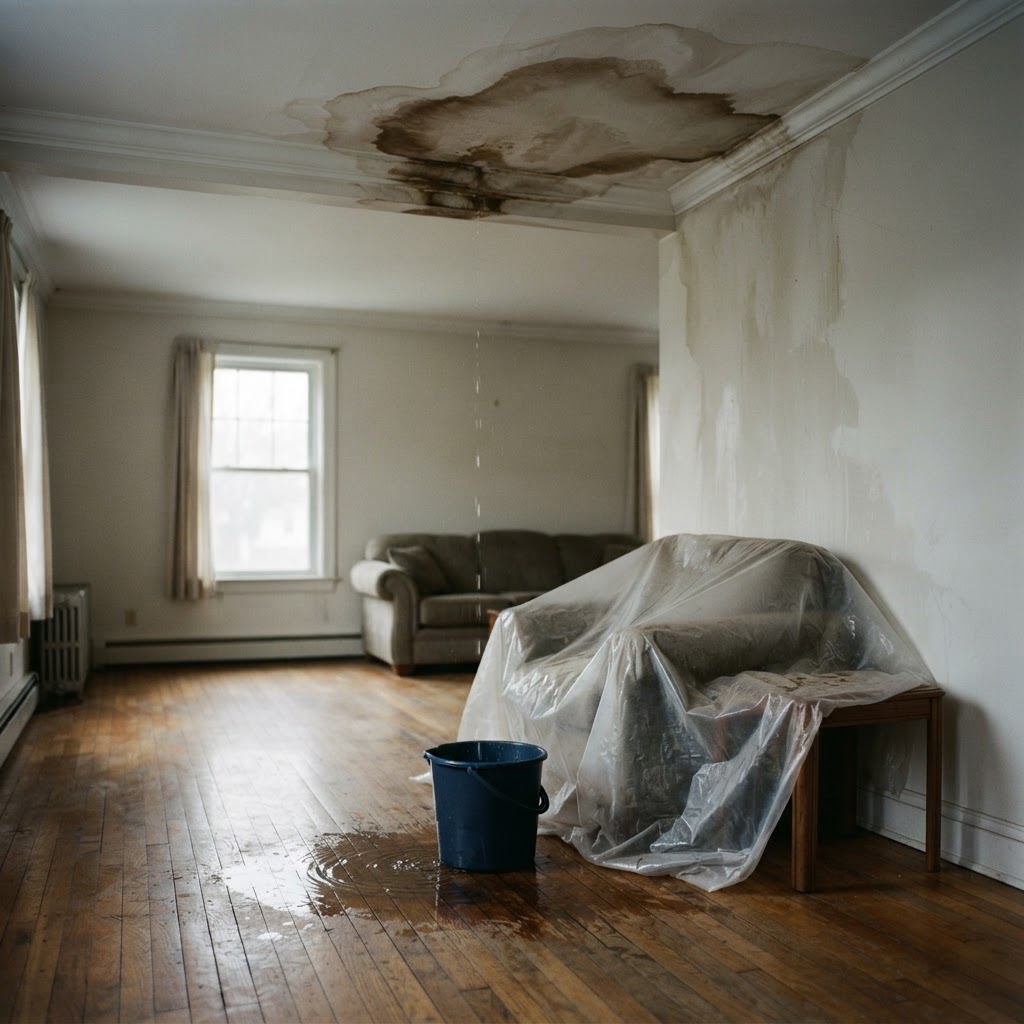
The moment you spot a leak, move furniture, electronics, and valuables away from the water and the surrounding area. Water spreads, so give yourself a wide margin. Cover anything that cannot be moved with plastic sheeting or a tarp to shield it from dripping water.
Step 2: Contain the Water
Place buckets, bins, or containers under the leak to catch dripping water. Lay down towels around them to protect the floor. If the leak is spread out, use multiple containers. Containing the water limits damage to your floors, carpets, and ceilings while you arrange repairs.
Step 3: Relieve a Bulging Ceiling — Carefully
If you see a bulge or sagging spot in your ceiling, water is pooling above it. This is a sign of significant water accumulation, and if left alone, the ceiling could collapse under the weight. If it is safe to do so, you can carefully relieve the pressure by puncturing a small hole at the lowest point of the bulge (with a container beneath to catch the water), allowing the trapped water to drain in a controlled way. Keep people and pets clear of the area. If you are unsure, wait for a professional.
Step 4: Soak Up and Dry the Water
Soak up standing water with towels, mops, or a wet/dry vacuum to limit damage to floors, carpets, and furnishings. The faster you dry the area, the less damage — and the lower the risk of mold developing.
Step 5: Document Everything for Insurance
Before cleanup is complete, photograph and video the damage — the leak, the water, and any damage to ceilings, walls, floors, and belongings. This documentation is important if you file an insurance claim, as storm-related roof damage is often covered. Note the date and, if relevant, any storm that caused it.
Step 6: Identify the General Source (Without Climbing on the Roof)
Try to note where the water seems to be coming from inside — which room, which part of the ceiling. This helps your roofing contractor. But do not climb onto the roof, especially during a storm or in wet, icy conditions. A wet, damaged roof is extremely dangerous, and roof access should be left to trained professionals. Remember, too, that water travels — the leak’s entry point is often not directly above where you see the drip.
Step 7: Call a Professional Roofing Contractor Right Away
The most important step is to contact a professional roofing contractor promptly. A roof leak never fixes itself and always gets worse. A professional will find the true source of the leak, make proper repairs, and help prevent further damage. For storm-related leaks, they can also assist with your insurance claim. Sam Construction Group USA responds to emergency roof leaks across Northern Virginia, inspecting and diagnosing the true source — not just the visible symptom — and making lasting repairs.
What NOT to Do After a Roof Leak
- Do not ignore it — even a small leak causes escalating damage
- Do not climb onto a wet or damaged roof — serious fall risk
- Do not attempt major DIY roof repairs during a storm — dangerous and ineffective
- Do not assume the leak is directly above the stain — water travels
- Do not delay calling a professional — fast action limits damage
Why Fast Action Matters So Much
Water intrusion spreads rapidly into decking, insulation, drywall, and framing, turning a small leak into major structural and interior damage — and creating conditions for mold. The faster you contain the leak and get professional help, the less damage you will face and the lower your repair costs. Prompt documentation also supports an accurate, timely insurance claim.
Why Hidden Damage Requires Professional Inspection
A leak you can see inside usually means water has already gotten past the shingles and into the structure. What looks like a small leak can indicate more extensive roof damage. This is why a professional inspection after any leak is essential — to find and fix the real problem and assess the full extent of the damage.
Your Emergency Roofing Team in Northern Virginia
After a leak, out-of-town crews are unreliable and often disappear. Sam Construction Group USA is local, licensed, and accountable — ready to respond to your roof leak emergency, find and fix the source, help with your insurance claim, and stand behind our work.
Dealing with a roof leak right now? As soon as it is safe, call Sam Construction Group USA at (571) 294-4977 for emergency roof leak help.
Request Emergency HelpFrequently Asked Questions
What should I do first when I discover a roof leak?
Protect your belongings by moving and covering them, then contain the water with buckets and towels. If your ceiling is bulging, relieve it carefully. Soak up standing water, document the damage with photos for insurance, note where the water is coming from inside — and call a professional roofing contractor right away.
Should I go on the roof to find the leak?
No. Never climb onto a wet or damaged roof, especially during a storm or in icy conditions. It is extremely dangerous, and roof access should be left to trained professionals. Also remember that water travels, so the leak’s entry point is often not directly above where you see the drip.
Why should I document the damage before cleaning up?
Photographs and video of the leak, the water, and any damage to ceilings, walls, floors, and belongings are important if you file an insurance claim, since storm-related roof damage is often covered. Note the date and any storm that caused it.
Why does fast action matter after a leak?
Water spreads rapidly into decking, insulation, drywall, and framing, turning a small leak into major structural and interior damage and creating conditions for mold. Fast containment and professional help limit the damage and the cost. Emergency help: (571) 294-4977.
A Leak Never Fixes Itself
Sam Construction Group USA, a licensed and insured Fairfax, VA roofing and restoration contractor, responds to emergency roof leaks across Northern Virginia — finding the true source and making lasting repairs. Call (571) 294-4977.
Request Emergency Help